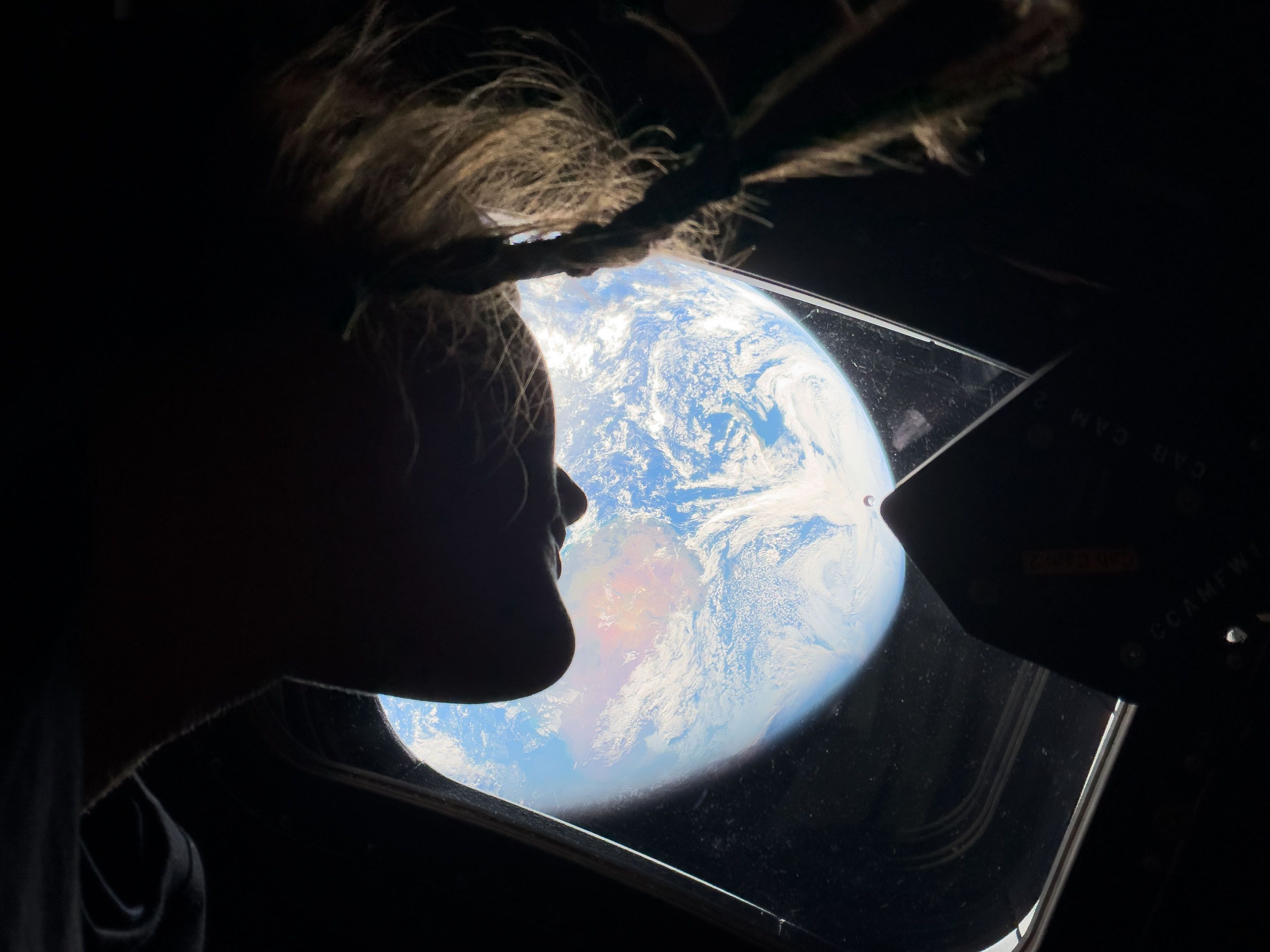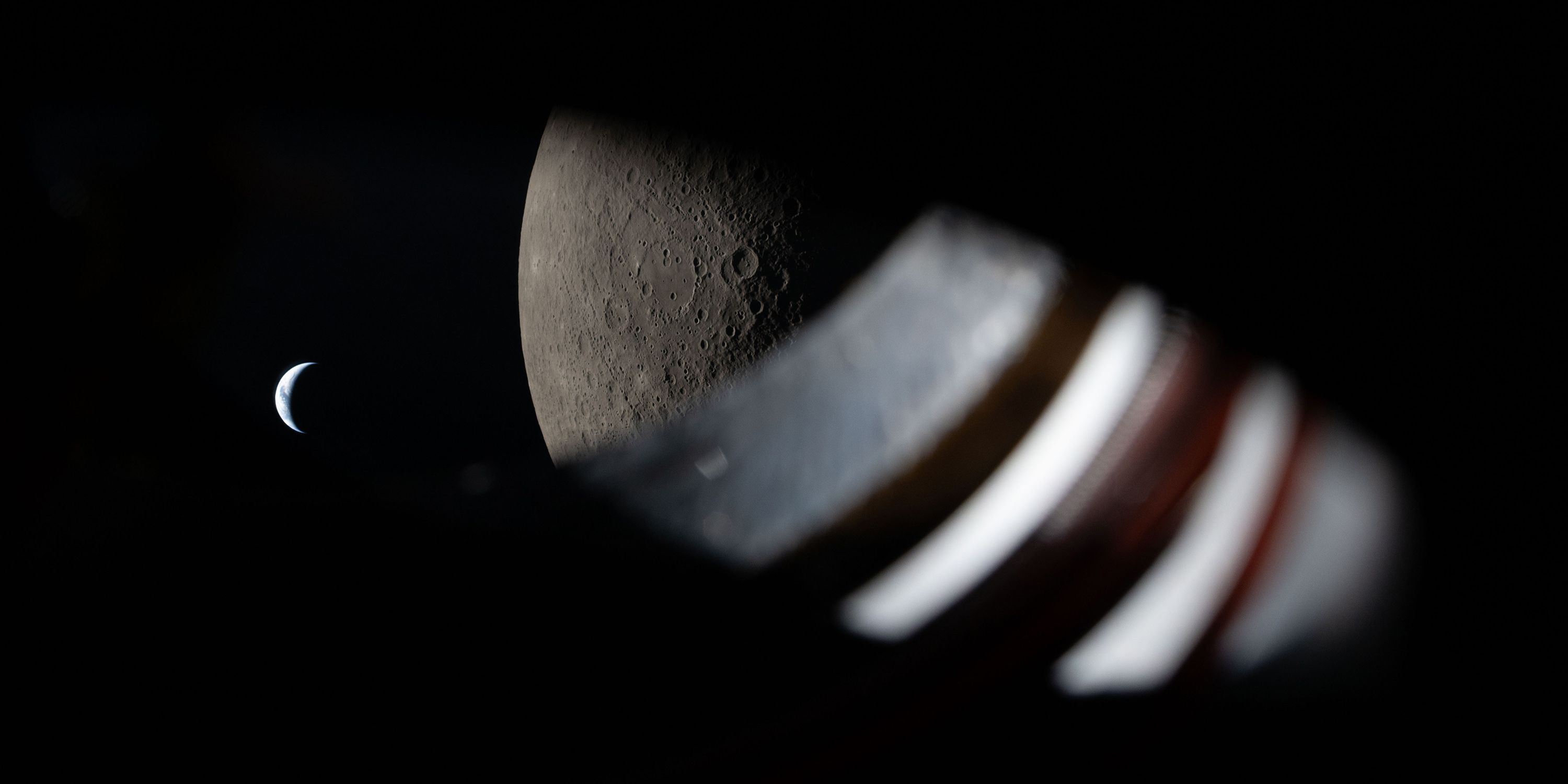
The contrast could not have been more obvious: on the surface of the Earth, there was war, continuing conflict, and an escalating sense of hopelessness among millions of people.
Above the planet, four people sailed serenely toward the Moon. Reid, Victor, Christina, and Jeremy were all highly trained professional astronauts, of course. However, what they shared with the world was not the steely-eyed narrative of the “Right Stuff” that had dominated the earlier Apollo Moon missions. No, they spoke of love, unity, oneness, “Moon Joy,” and the experience of the Overview Effect®.
What the entire planet saw on display from April 1 to April 10 illustrated the stark difference between “Surface Thinking” and “Overview Thinking.”
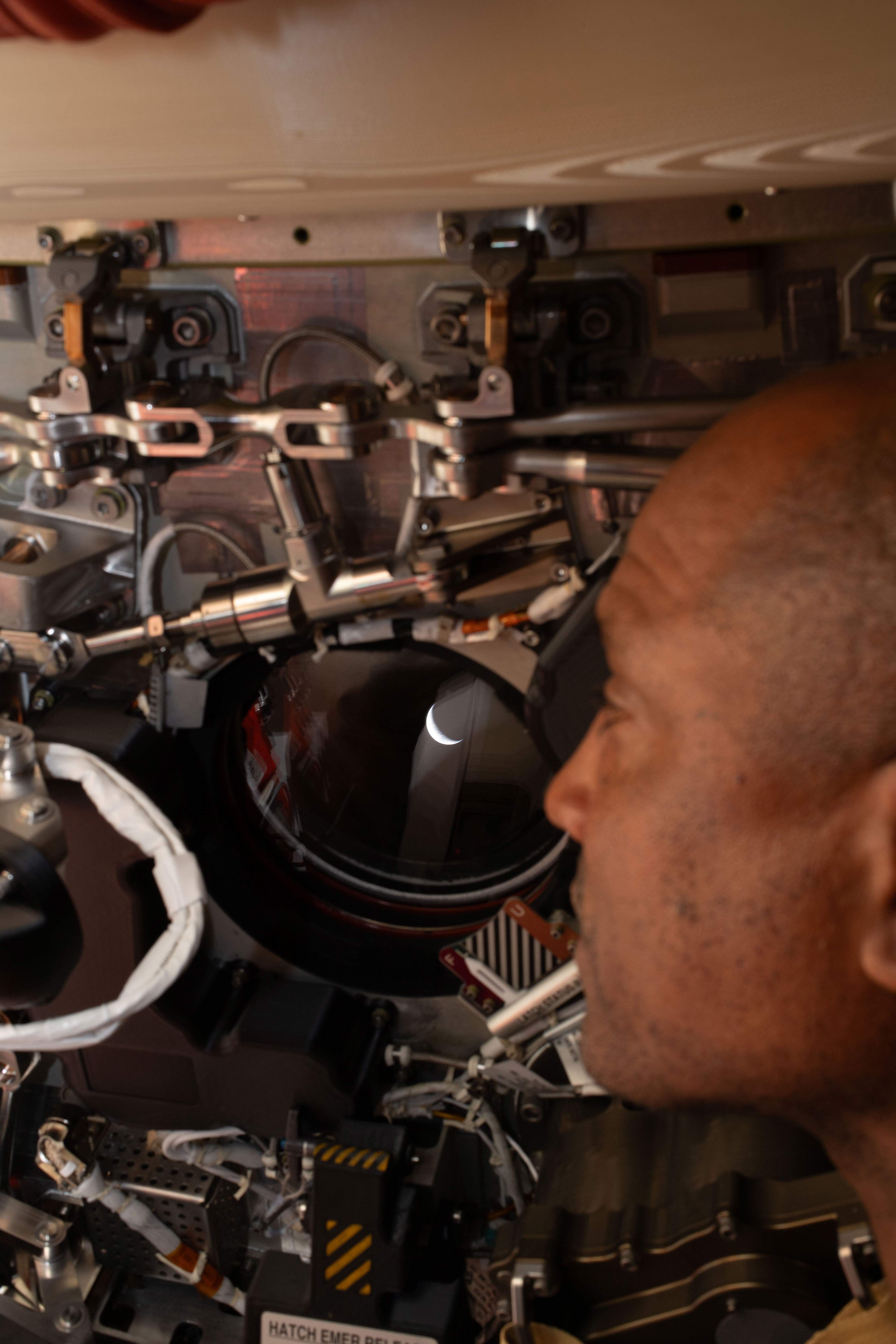
To understand this distinction, we must understand the Overview Effect. It is a phrase I coined in the 1980s after an epiphany on a cross-country flight. Looking out the window at the planet below, I realized that future humans living permanently “off-world” would have an “Overview” of the Earth. They would see the planet as a whole system without borders or boundaries, a living entity in which everything is interconnected and interrelated. They would experience “the Overview Effect.”
Of course, there was no one living permanently in outer space at the time, and there are no such people today. The idea was so powerful, though, that I had to find a way to validate (or deny) it. I began interviewing astronauts as proxies for these future space people, and they, for the most part, confirmed my hypothesis. Yes, they said, we did see the Earth as a living whole system, a luminous cradle of life floating in the darkness of an infinite cosmos. And “we realized that we’re all in this together,” they told me.
However, the term “Overview Effect” took on a nuanced meaning when I began talking with astronauts. I had imagined seeing the Earth in the sky every day as an ordinary experience for space dwellers, just as seeing the Moon in the sky every night is no surprise to us surface dwellers.
For Earthborn astronauts, though, the experience of the Overview Effect was extraordinary.
Growing up on Earth and planning to return home to her, astronauts experienced a cognitive and emotional shift in awareness and identity when they beheld the home planet from afar. Some of them cried at their first look at “Mother Earth.”
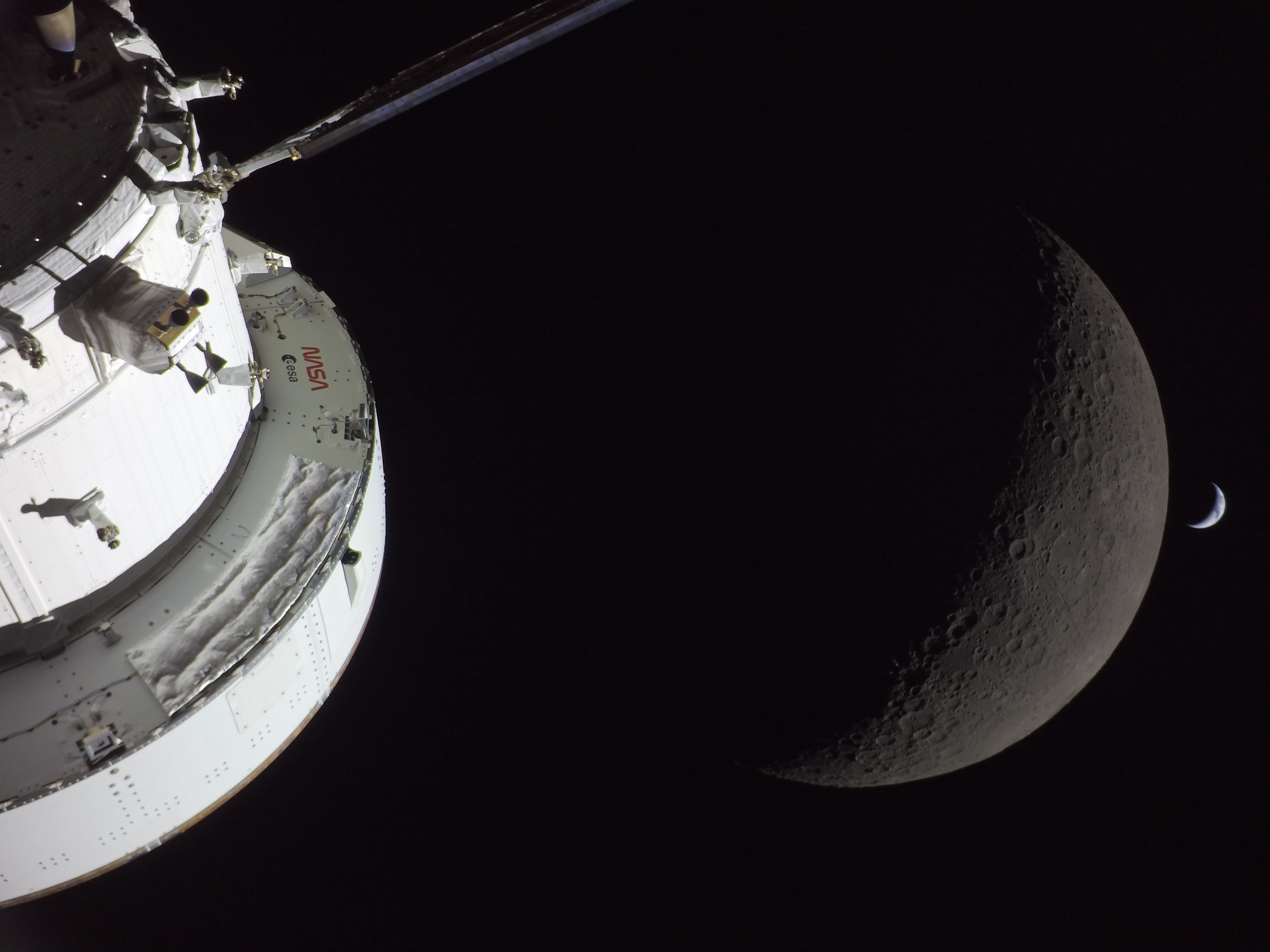
The Overview experience began to show up on suborbital hops and orbital missions. It became even more impactful on trips to the Moon, culminating in the iconic Earthrise photo taken on the Apollo 8 mission in 1968. Because of that photo, a difficult year ended on a note of hope.
From that moment on, the airplane flight in the mid-1980s to the current era, I continued to interview astronauts, about 50 of them at last count.
By the time of Artemis 2, I was able to summarize the Overview Effect with three words:
Truth: The view of the Earth from a distance reveals the truth of our situation. We are on a natural spaceship moving through a vast, lonely cosmos at a high rate of speed. We are the crew of Spaceship Earth.
Love: Seeing our beautiful planet redefines the meaning of beauty. Astronauts describe vibrant colors on an entity that “just glows.” Perhaps you don’t think you will ever go into orbit or travel to the Moon, but if you have been in love, you know what the Overview Effect is.
Identity: After a few orbits, or on the way to the Moon, astronauts realize that borders and boundaries on the surface only exist in our minds. They see their hometowns and countries as part of a whole system, and they begin to identify with “that whole thing.” Their identity shifts from “me” to “we.”
In 2019, I interviewed Reid Wiseman at Johnson Space Center and Christina Koch while she was on the International Space Station, so I knew that they had already experienced the “orbital Overview Effect.” I could only imagine what they might have to say about the “lunar Overview Effect.” Both interviews are in my book, and here is something Reid said that was a harbinger of what would occur on Artemis 2:
If you could get seven billion people to go up there and look down, even just for 30 seconds, you would change all of them, forever. They wouldn’t all come back and be friends. They wouldn’t all come back and tear down border walls and things like that.
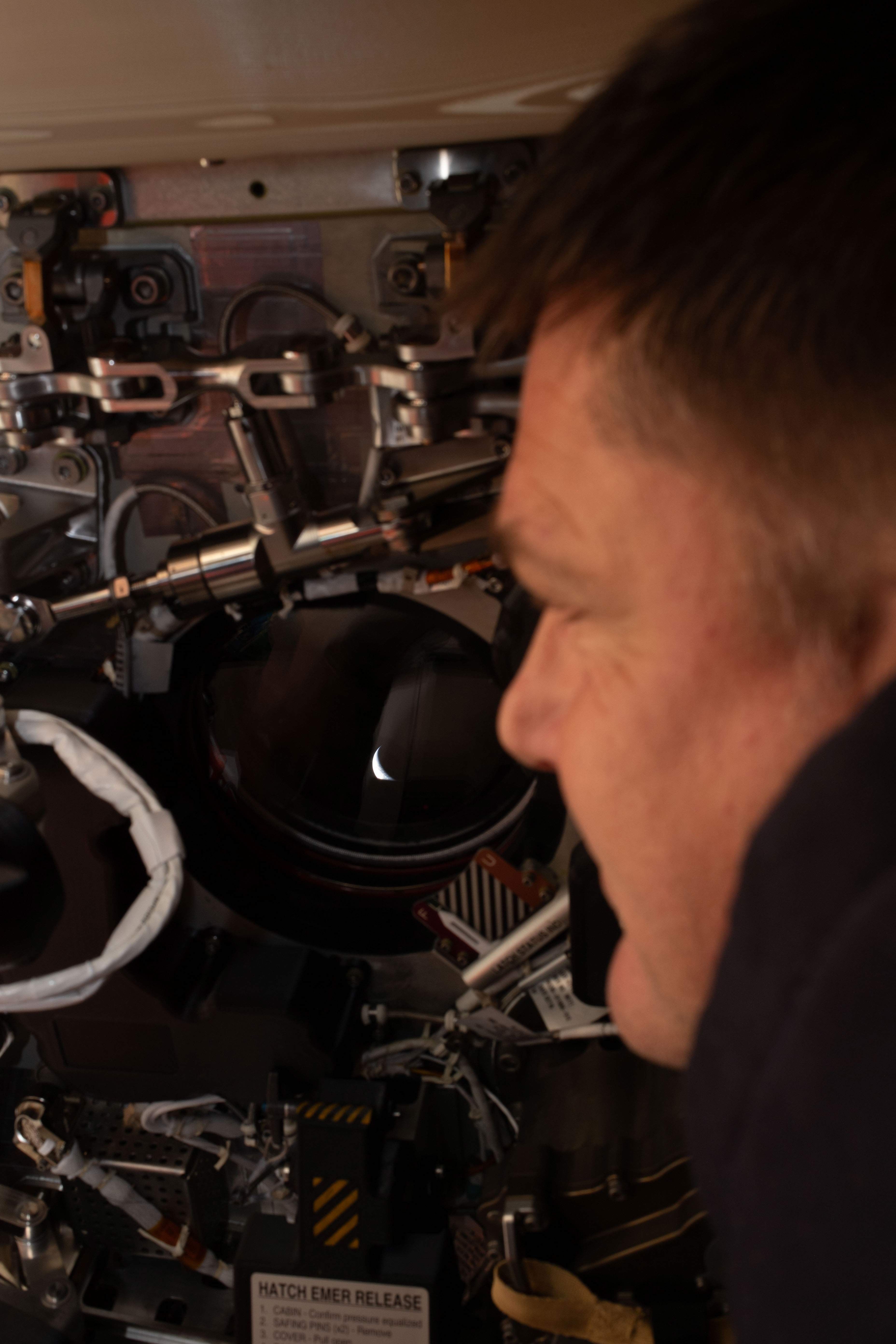
But you would change all of them to some degree, and you would change them for the better, and they would have a different view of the planet.
And here is what Christina said as she bobbed up and down in weightlessness with her colleagues, Anne McClain and Nick Hague:
No matter who you meet, no matter where they’re from, not only does their culture define them and make them special, but also the geography of where they’re from. Everywhere on the Earth looks different, and it helps to define who we are…But underlying it all, all of us are human, and we’re all from the same planet.
I don’t think the Artemis 2 astronauts used the term “Overview Effect,” but they were using “Overview Speak” during the entire mission, and, like Apollo 8, they gave Earthlings a sliver of hope during terrible times. Now, in the wake of Artemis 2, humanity has a fundamental choice to make. It is between “Surface Thinking” and “Overview Thinking,” between the truth of interconnectedness and the illusion of separateness. The “Artemis Effect” will merge into the Overview Effect, and our task becomes “bringing the Overview Effect down to Earth.”
What is your choice, fellow crewmates?
…