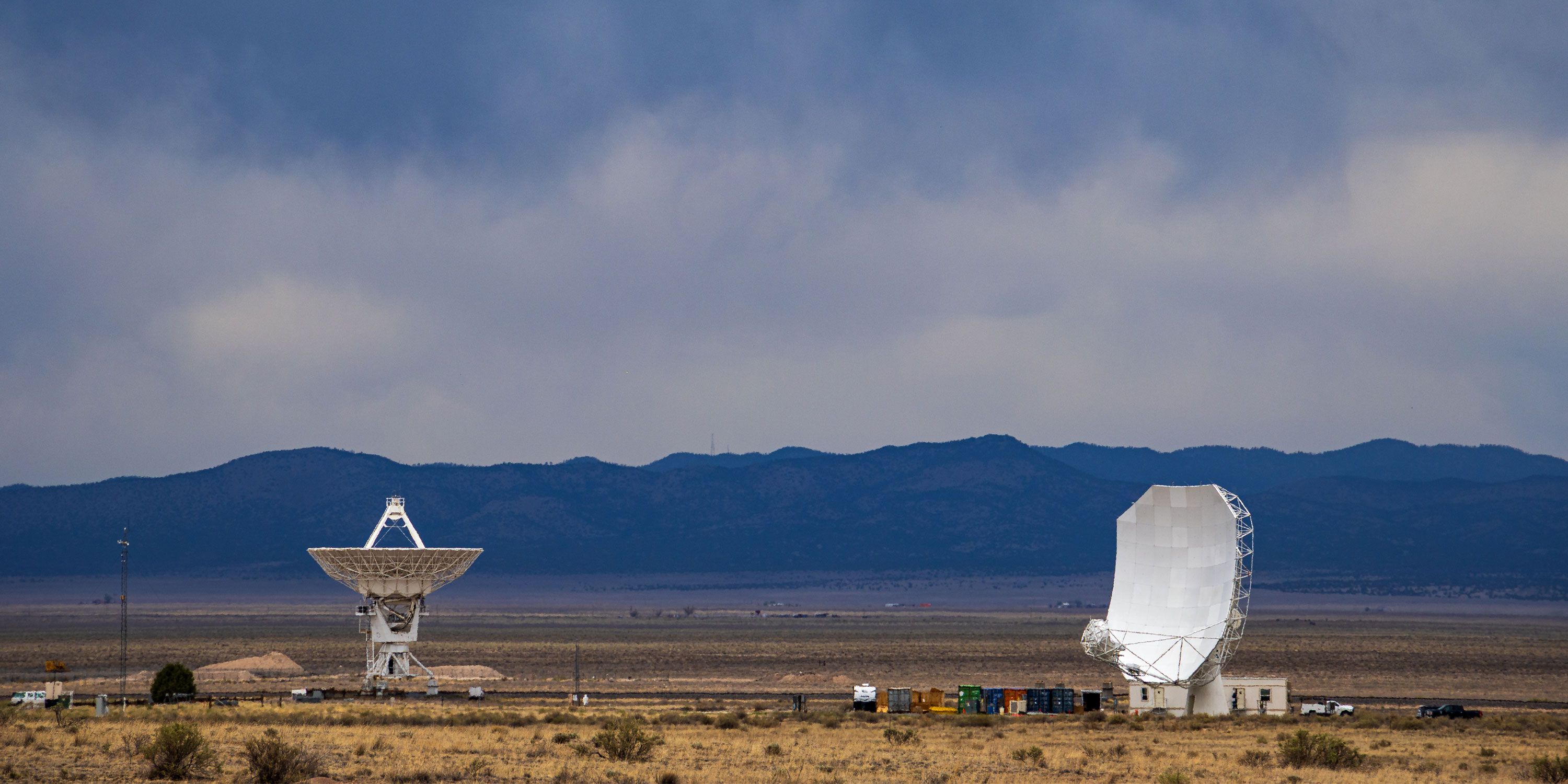
In May, amid the desert scrub in the American Southwest, a new beginning could be found.
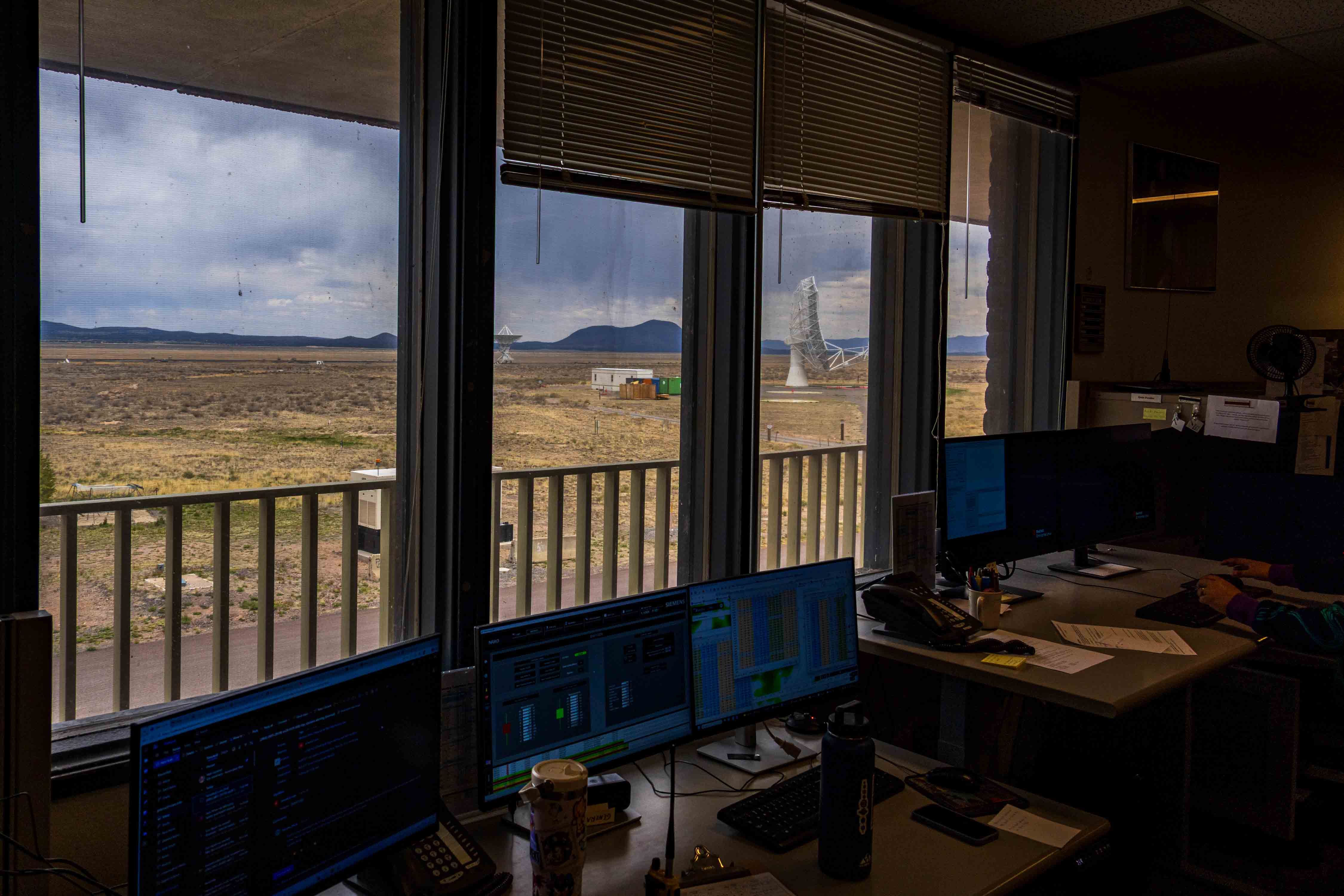
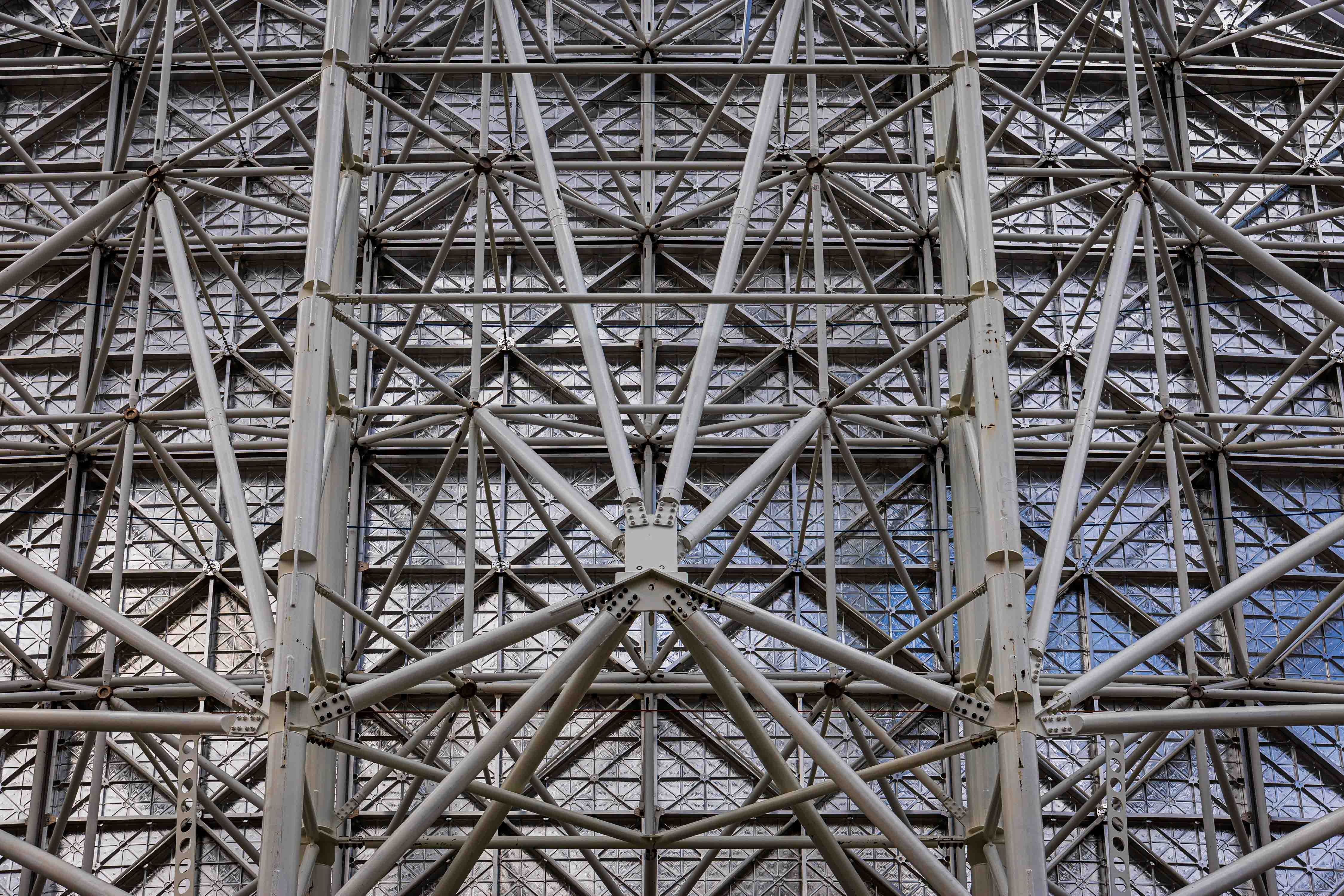
Standing six stories tall, an eight-sided concave dish had seemingly sprouted from the ground, a cage of scaffolding in front housing vital equipment. Both day and night, the dish tilted upwards. It appeared to be listening carefully, cocking a metaphorical ear to the sky.
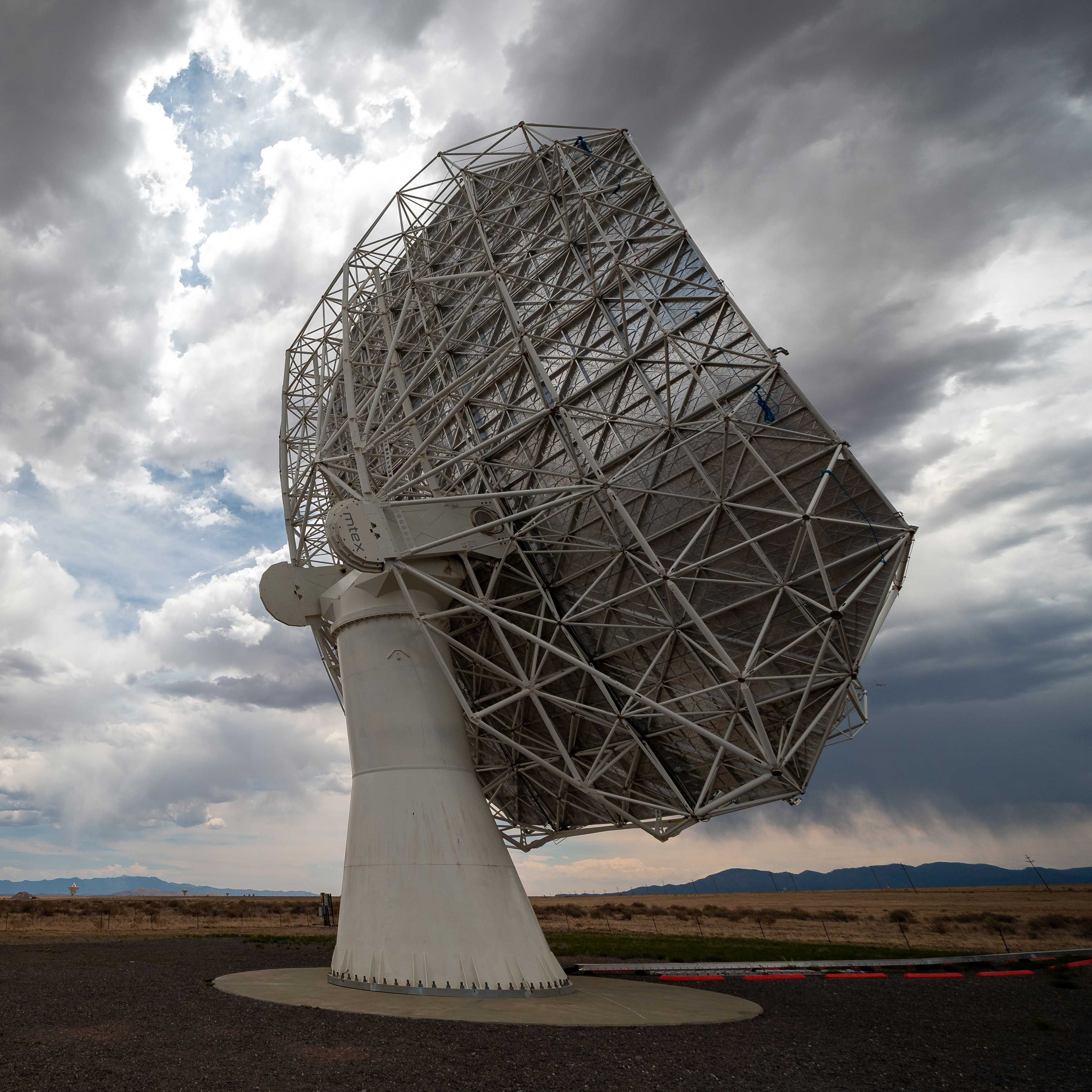
The structure stood alone, but soon it will be accompanied by 262 others, most concentrated around it, but some spread as far and wide as Hawaii and the East Coast. This planting of a vast forest of metallic dishes, most of them 18 meters in diameter, is not a techno-organic invasion or a bizarre art installation, but rather a new frontier in radio astronomy and a symbol of the 21st century replacing the triumphs of the 20th.
For 50 years, 28 iconic structures have stood tall deep in the New Mexico desert. These are the dishes of the Very Large Array (VLA), a massive network of radio telescopes made famous by Hollywood, most notably in Carl Sagan’s Contact. For about half a century, the VLA has been the United States’ pre-eminent radio astronomy observatory.
But times are changing, and the VLA’s days are numbered. Though it had its most recent upgrade in 2012, which replaced much of the old seventies-era electronics, the demands of radio astronomy require a whole new approach.
Therefore, the VLA will soon make way for the next generation.
And that new structure that has appeared in the desert? It’s a prototype radio dish for what is being called the next generation VLA, or ngVLA for short. Those 28 old 25-meter dishes (27 of which are in operation at any one time, with the 28th switched in and out whenever one of the others requires maintenance) will be phased out and replaced by 244 dishes spanning 18 meters in diameter and a further 19 dishes six meters across. Their combined sensitivity is ten times greater than the old VLA, and their resolution will reveal unprecedented details about the cosmos.
Working Together
While 214 of the large dishes will be concentrated in the US south-west, the rest will be spread across continental North America. They will operate as a network using interferometry, where the signals detected by each telescope are combined as though they were one single, huge telescope.
The United States hosts numerous radio telescopes. Besides the VBLA and the giant 100-meter dish at Green Bank in West Virginia, there is the Very Long Baseline Array (VLBA). It uses interferometry to join together ten telescopes right across the US with an apparent diameter of 8,611 kilometers. Yet the VLBA is also set for retirement, and that means the ngVLA will pull double duty.
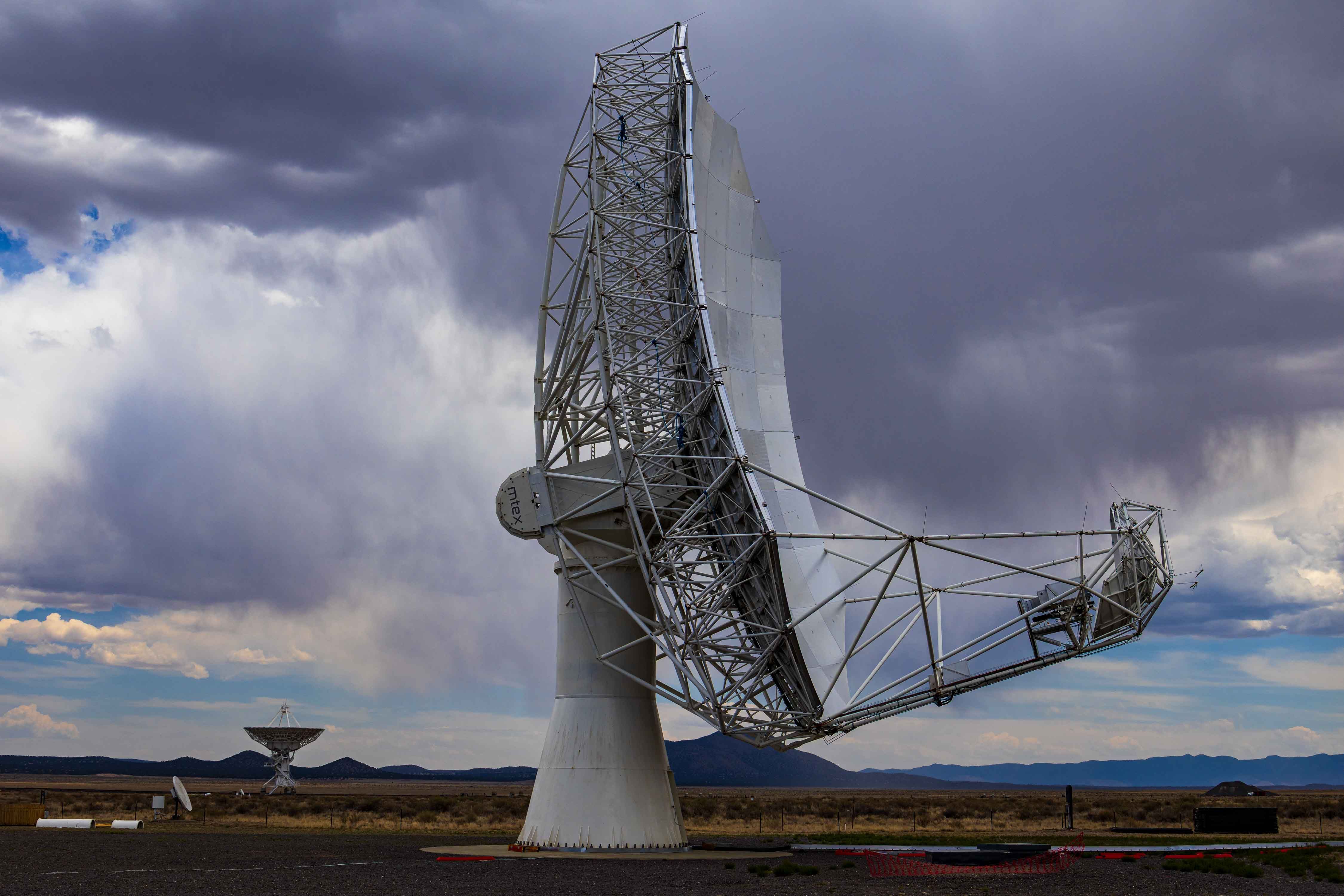
Supercluster spoke to Eric Murphy of the National Radio Astronomy Observatory (NRAO), a radio astronomer who works as the ngVLA’s Project Scientist. “The ngVLA replaces both the VLA and the VLBA simultaneously with a single connected interferometer,” he says.
Murphy explains that in the past, data gathered by each telescope in the VLBA had to be transported on disk to a central site where it could be correlated together through a painstaking process. Instead, once it is up and running, the ngVLA will do that automatically, transmitting the data from all 263 stations to a central processing house. This will make the process far more efficient, allowing astronomers to better take advantage of the gains in resolution and sensitivity that the ngVLA will offer.
The First Dish
In May, the ngVLA’s first prototype dish was rolled out for testing, and Supercluster's Erik Kuna was embedded to capture the future of radio astronomy firsthand.
Originally, the plan was to test the prototype on its own by pointing it at the Moon, which doesn’t produce radio waves of its own, but it does reflect them.
“The prototype went beyond what we expected,” says Murphy. Besides the Moon, it observed the Sun and the pulsar in the Crab Nebula. Then, as the coup de grace, it was linked up with the telescopes of the old VLA to observe Perseus A, which is a radio galaxy 230 million light-years away with an active black hole at its core.
“The fact that we hooked it up with the VLA antennas to make an image was pretty awesome,” says Murphy.
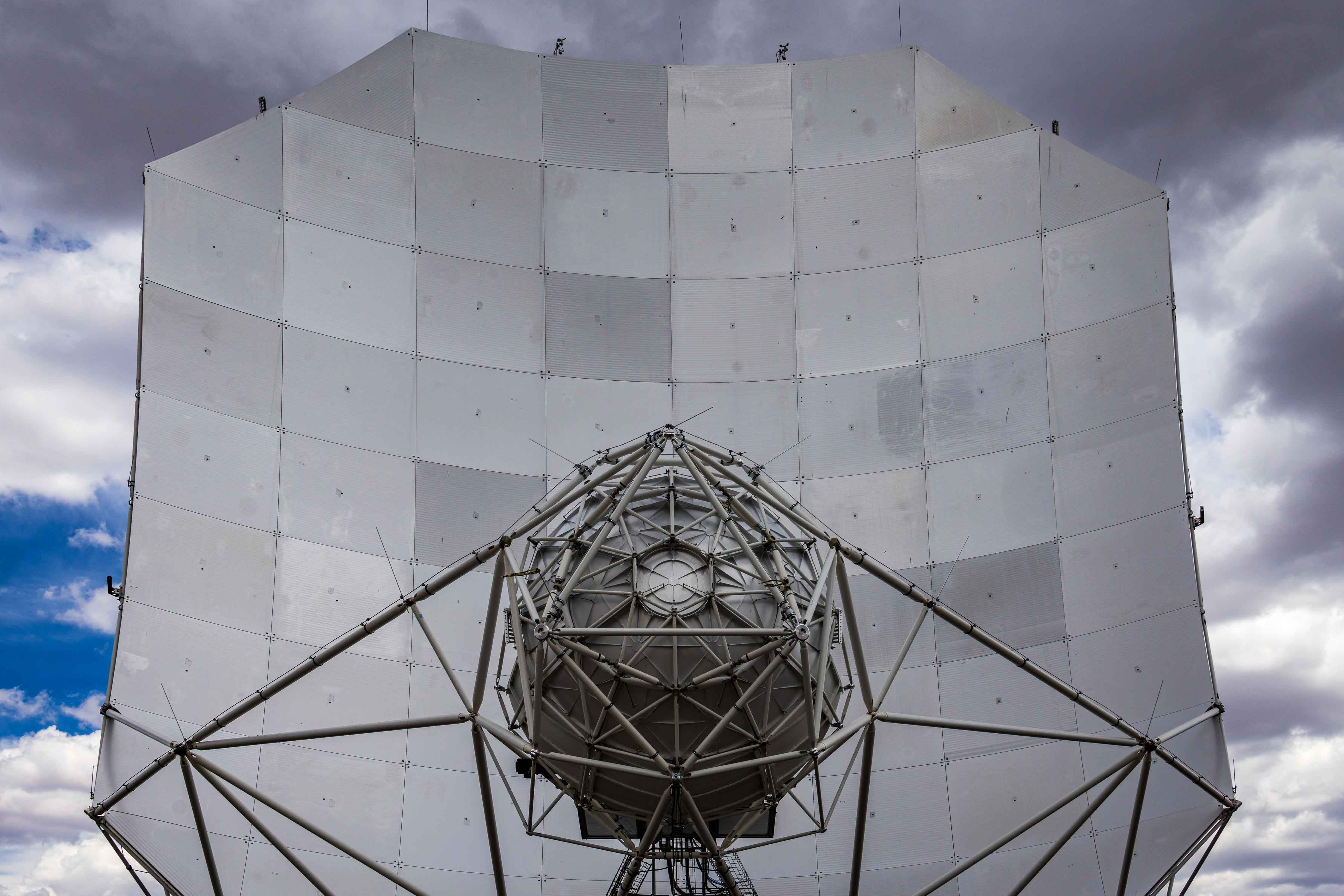
The next step will be to test about a dozen of the dishes and integrate them all together to see how they perform in unison. If everything checks out, the rest of the dishes will roll off the production line at the German company mtex pretty quickly.
Once they’re all installed, the greatest distance between the ngVLA’s dishes will be 8,860 kilometers, between the East Coast and Hawaii. This distance is known as the baseline, and just like an optical telescope can detect more light the larger its aperture is, the larger the baseline is, the greater the resolution that a radio interferometer has.
That said, there are some pretty big gaps between the ngVLA’s most distant outposts.
“The six-meter antennas fill in some of those gaps,” says Murphy. In doing so, they boost the sensitivity, increasing the interferometer’s ability to see low surface brightness — i.e., fainter — objects.
“That’s why we have the compact core of antennas and then other antennas further away, so we can sample a range of spatial scales,” adds Murphy, pointing out that not all the 263 dishes need to be used at the same time, as some observations might only merit the involvement of the main core.
Seeing Planets Form
The things that the ngVLA will show us will have to be seen to be believed. For years, ALMA, the Atacama Large Millimeter/submillimeter Array of 66 radio dishes in Chile, has been imaging planet-forming disks of gas and dust encircling young stars. It has revealed how some of these disks sport rings plowed clear by infant planets, while other disks are coiled with spiral patterns, and has spotted complex organic molecules that are some of the basic precursors of biologically relevant molecules, implying that the building blocks for life begin in space.
What ALMA has seen has been impressive, revelatory even. But once the ngVLA is on the scene, “it will move planetary disk science in a fundamentally new direction,” says Murphy.
ALMA operates at short wavelengths (mm and sub-mm) and higher frequencies ranging between 35 and 950 GHz, but the problem is that planet-forming disks are pretty dense with dust, and Murphy likens it to trying to look through a wall.
However, the dust becomes magically transparent at lower frequencies, which the ngVLA will be capable of observing at (its frequency coverage spans 1.2 to 116GHz, equating to radio wavelengths ranging from centimeters to millimeters). Therefore, ngVLA will be able to see more of what’s going on in the disks.
Furthermore, whereas ALMA’s resolution is limited to capturing a planet-forming disk in its entirety in one shot, the vastly greater resolution of the ngVLA will be able to see down to milli-arcsecond scales, equating to a single astronomical unit.
Support Supercluster
Your support makes the Astronaut Database and Launch Tracker possible, and keeps all Supercluster content free.
Support(A quick note about the units here. The night sky is divided into 360 degrees if you turn all the way around. A single degree is made up of 60 arcminutes, and a single arcminute is 60 arcseconds. A milliarcsecond is a thousandth of an arcsecond, or 3.6 millionths of a degree. Meanwhile, one astronomical unit is the average distance between Earth and the Sun, defined as 149.6 million kilometers.)
“We’ll be able to watch Earth-sized rocky planets forming,” enthuses Murphy.
Moreover, we could potentially see more of the creation of the raw materials for life.
ALMA has found complex organic molecules in planet-forming disks, from things like polycyclic aromatic hydrocarbons to the likes of hydrogen cyanide, methyl cyanide, methyl formate, and so on. These are all considered precursors, simple building blocks of molecules that are more directly related to life. The ngVLA will be able to look for even more complex precursors that are perhaps just one or two steps removed from amino acids, or maybe even detect amino acids directly, if they have previously been identified in interstellar clouds. Plus, it will try and seek to test the chirality of these biologically useful molecules. The chirality refers to whether molecules are ‘left-handed’ or ‘right-handed’ in terms of their symmetry, yet for some reason, life on Earth uses only left-handed molecules, and nobody knows why. Perhaps what the ngVLA finds will offer some clues.
“The science case for astrochemistry on ngVLA is a very interesting and strong one,” says Murphy.
Cosmic Dots
The science that ngVLA will be doing isn’t all about planets. It will look further away to study the evolution of galaxies and their reservoirs of star-forming hydrogen. It will watch the radio flashes of pulsars to test gravity in extreme environments and search for black holes. It could perhaps even contribute to solving the mystery of the ‘little red dots’ as an example of just how deep and far its powers will take us.
Little red dots are bizarre objects that were found almost immediately when the James Webb Space Telescope began science operations in 2022. Little red dots were present in the Universe 12 to 13.5 billion years ago, and are highly compact, being just a few hundred light-years across. Our best hypothesis is that these are huge gas clouds that act as wombs for the birth of supermassive black holes. The smothering clouds conceal the baby black holes, but as the interior of the cloud falls into the black hole, fueling the black hole’s growth, the infalling material heats up and emits energy that heats the surrounding cloud, causing it to glow like a star’s outer layers.
Hence, they’ve been nicknamed ‘black hole stars’.
They had only been seen in infrared light, but recently, there was a detection of one in X-rays by NASA’s Chandra X-ray Observatory. The idea is that the radiation from material falling onto the black hole has eaten away at the cloud, leaving it in tatters with holes for X-rays to pour out from.
Little red dots were not known about when the science case for the ngVLA was first drawn up, but Murphy thinks it is possible that the ngVLA could detect some and help us better understand what they are.
“The potential is certainly there to find some,” he says. “If there are underlying buried AGN [active galactic nuclei, a.k.a. an active supermassive black hole] in those things and they are accreting, then I think the chances of us picking them up are quite high.”
For Posterity
In the meantime, the old VLA will continue to plug away and make observations, but when ngVLA is online, what will happen to the VLA and its historic radio dishes?
The VLA is ultimately owned by the National Science Foundation, and Murphy doesn’t yet know what their plans are.
“Maybe they’ll auction a couple if someone wants to pick one up and put it in their backyard!” he laughs, half jokingly, because private, well-heeled individuals or institutions may be interested.
“I have to imagine that one of them at least will stay on site for visitors to see as a museum piece,” Murphy adds.
It will be sad to see such a recognizable radio observatory disappear, especially given that we lost another iconic observatory, the Arecibo radio telescope in Puerto Rico, not so long ago either. For posterity, the VLA’s role in expanding our knowledge of the Universe deserves its place in history.
When operational, though, the ngVLA will start carving out its own place in astronomical history — and it’s going to be exciting to see just what shape that place in history takes.