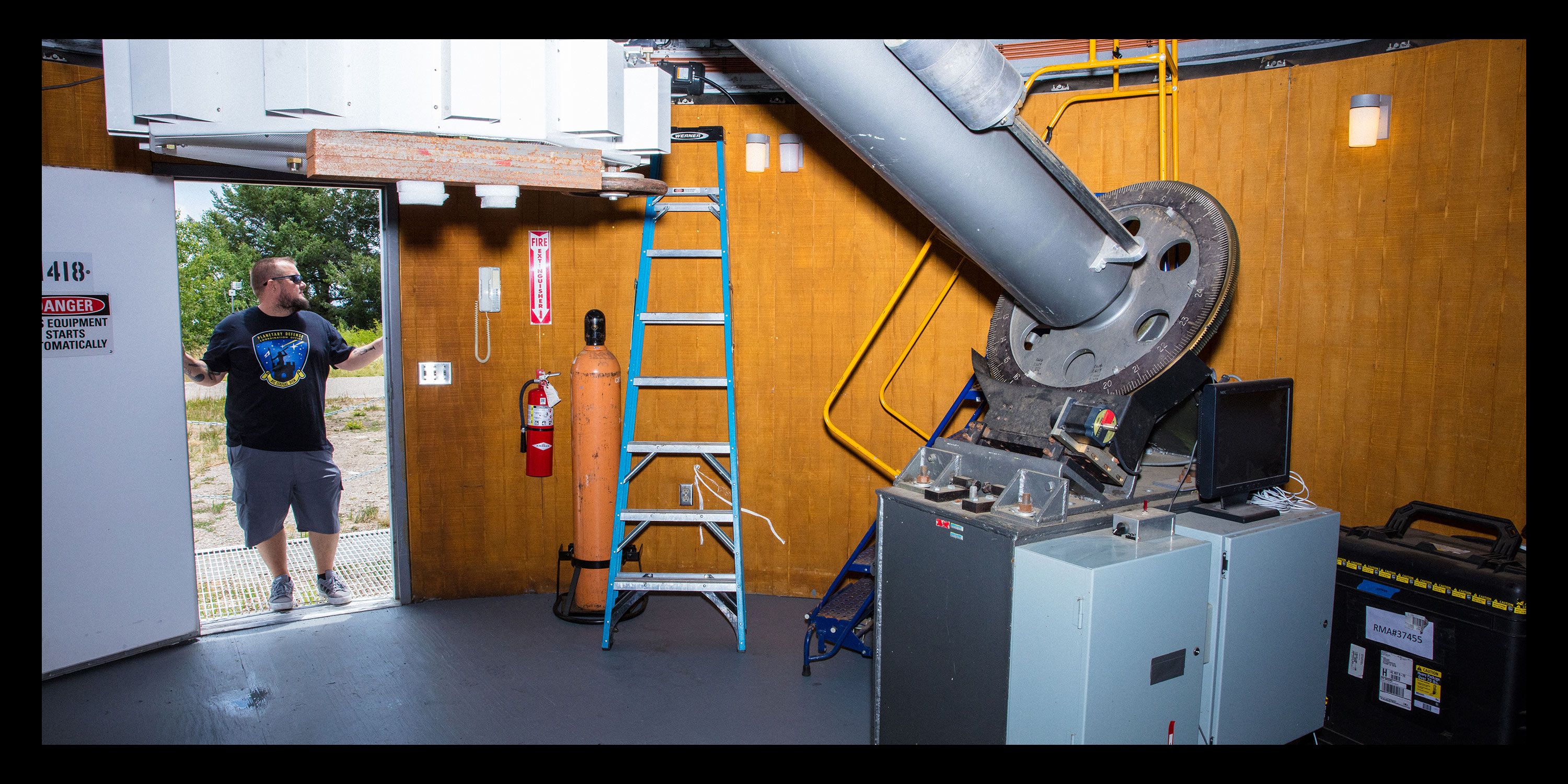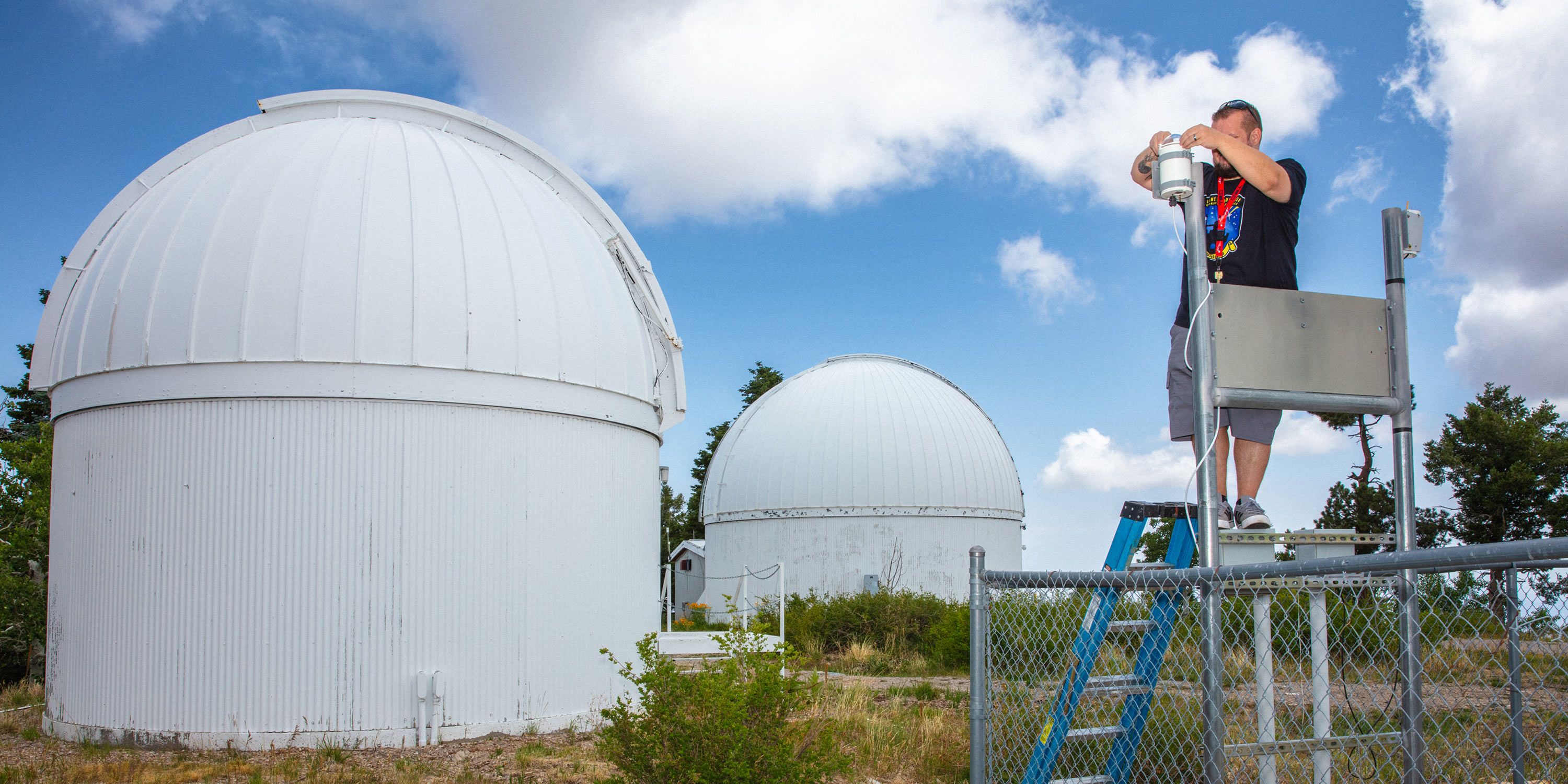
David Rankin is the closest thing Earth has to a space superhero.
As an observer and operations engineer at the Catalina Sky Survey, a NASA-funded planetary defense program that utilizes the telescopes atop the Santa Catalina Mountains, he spends hours looking for dangerous rocks that could cause catastrophic damage to Earth. Telescope operator, asteroid hunter, photographer, storm chaser, programmer, are just some of his credentials. David even has an ancient marine reptile called a plesiosaur named after him, which he discovered at age 14.
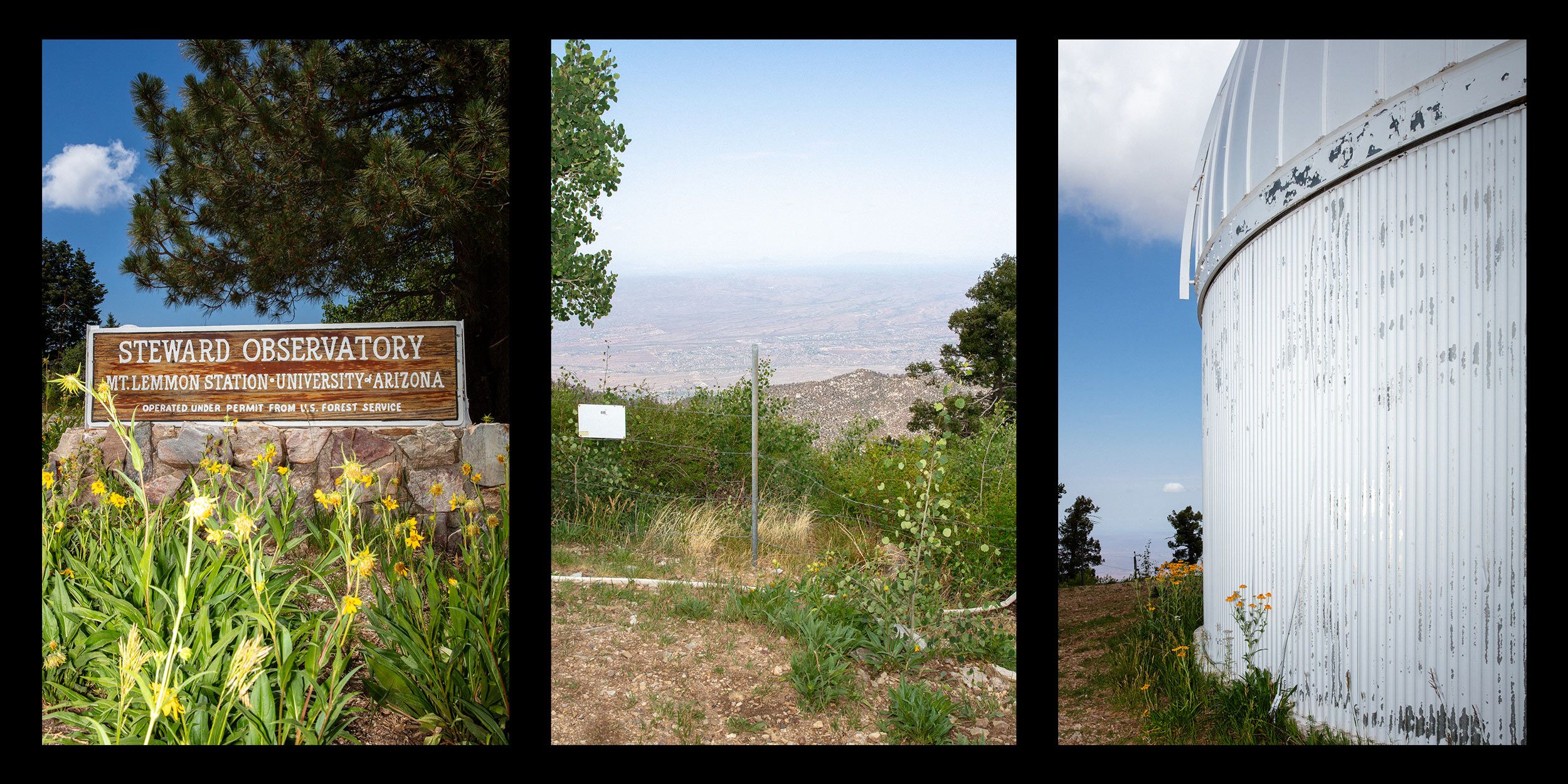
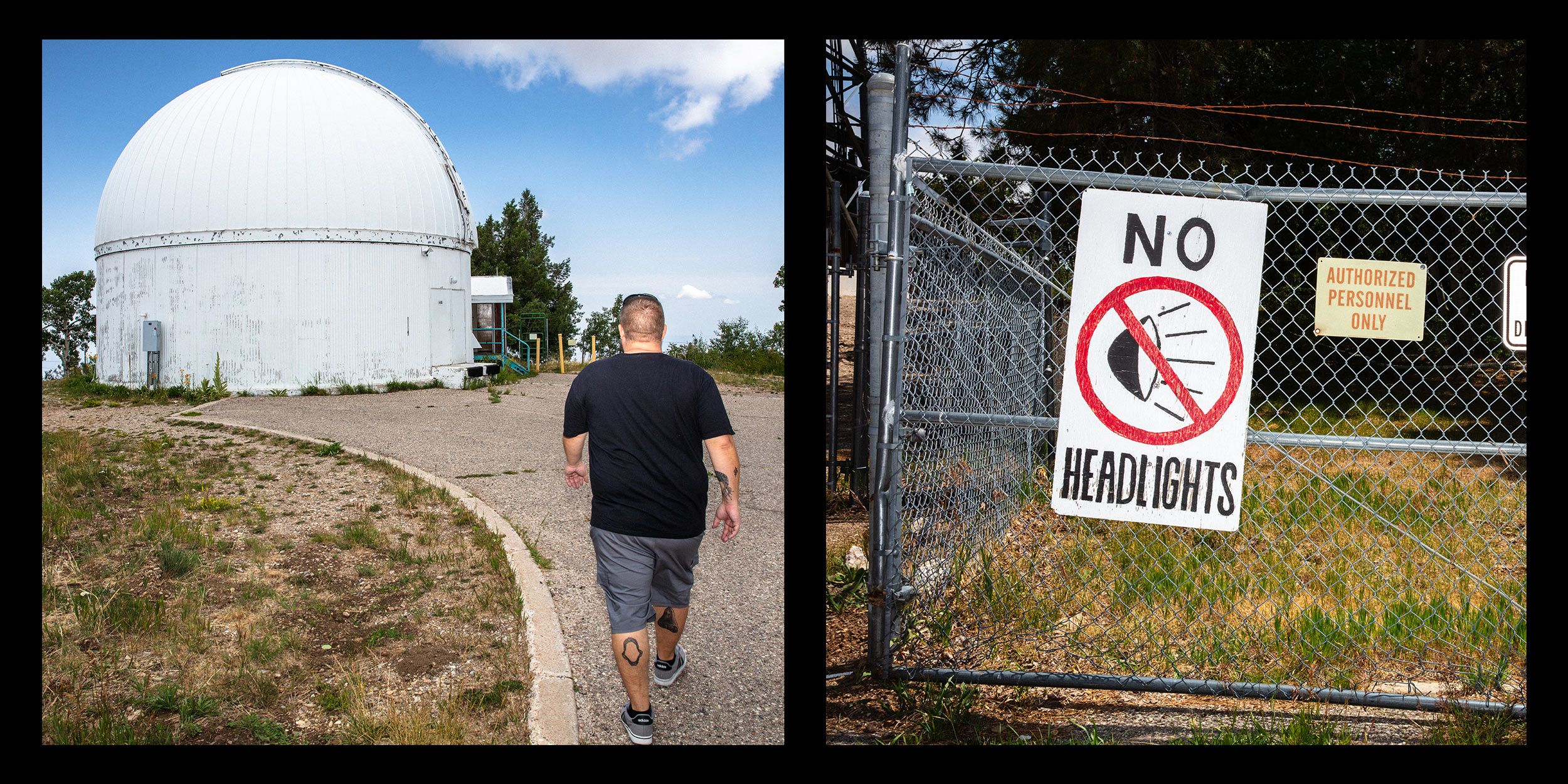
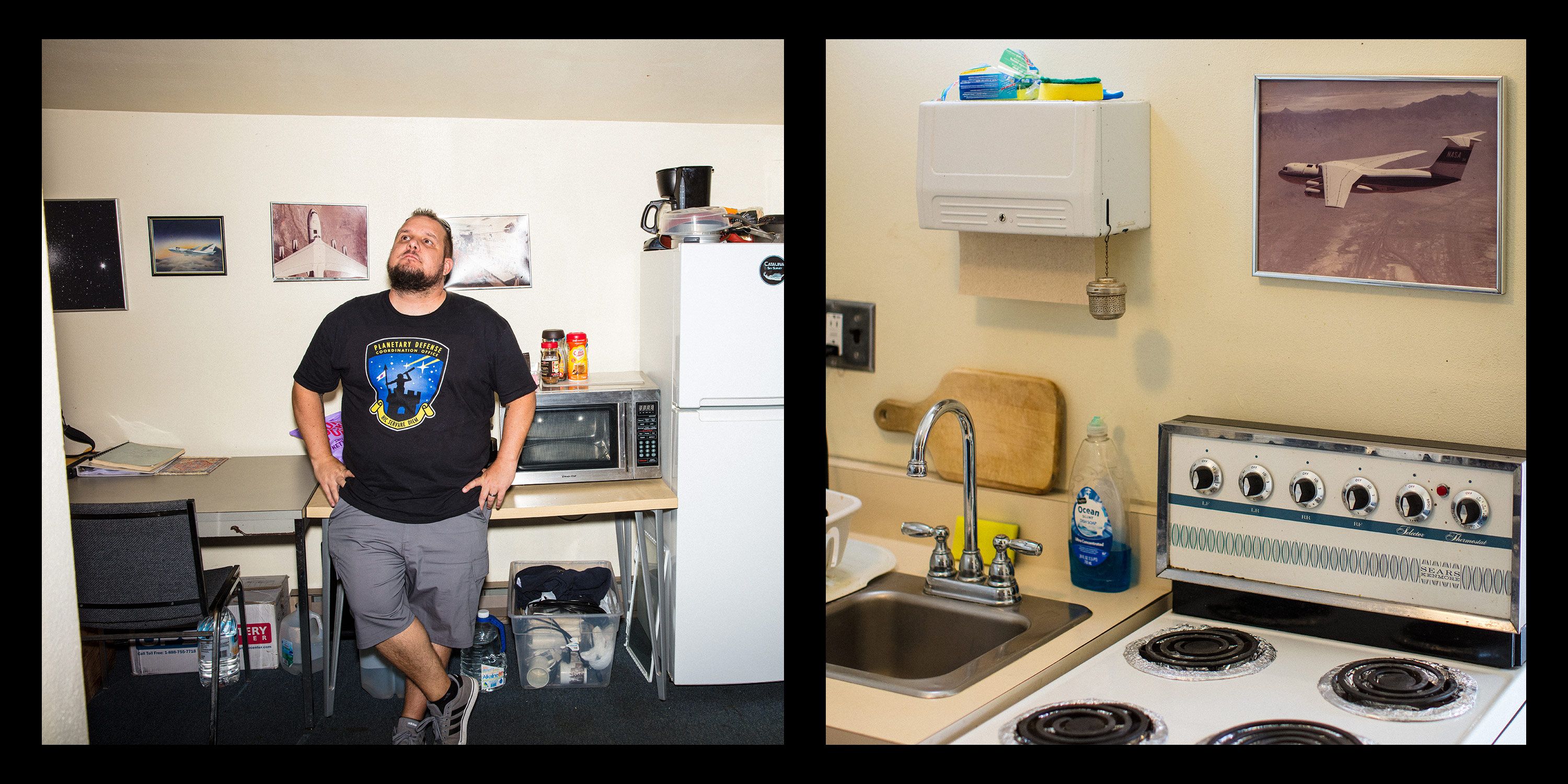
At the mountain range’s highest point, Mt. Lemmon, we found the brilliant and mild mannered skywatcher, nonchalantly protecting the human race from extinction. Supercluster dispatched photographer Levi Christiansen to capture this jack-of-all-trades at work, and to peek inside the daily life of a planetary defender whose years of experience have coalesced into fascinating perspectives on doomsday, extraterrestrial life, and those headline-grabbing interstellar objects.
Following the photoshoot at the observatory facilities, Supercluster’s editorial team called David up for the coolest interview we’ve ever conducted:
Photography by Levi Christiansen.
<b> SUPERCLUSTER </b>
So what is it like, on a human level, hunting asteroids up there on Mt. Lemmon? Are you typically alone while working overnight shifts?
<b> DAVID RANKIN </b>
Yeah, we work alone, and that was nice during the pandemic, because it didn't really impact our safety. But, you know, it really is just you. You’ve got to be really passionate about this work. I've seen people come and go. It's not easy being on a night shift schedule, responsible for 12 shifts between two full moons. And sometimes with shifts of 12 plus hours, sundown to sunup.
But there's a thrill with the job, and the thrill is: we're discovering minor planets that are in orbit around the sun that nobody's ever seen before. On a nightly basis. I picked up two last night that are brand new. On a busy night, I've gotten 40.
And comets, we find comets. There's a lot of really neat stuff that you're able to do while you're sitting up in that telescope. And that's a driving factor for me. I love that thrill of discovery. And of course, on any given night, we could be working up there and pick up an asteroid that's, you know, coming in past Mars, has never been seen before, and it's gonna hit us.
We could also pick up an asteroid that's gonna hit us in 20 years.
So it’s a high consequence job, it's a high reward job. But yeah, the schedule is rough. You have to really live the lifestyle. Most of us stay on a night schedule, 24/7.
Photography by Levi Christiansen.
<b> SUPERCLUSTER </b>
How many asteroids have you spotted on your watch?
<b> DAVID RANKIN </b>
I started working here in 2019, I think April, I quit counting, probably in the thousands at this point.
<b> SUPERCLUSTER </b>
Terrifying, but okay,
<b> DAVID RANKIN </b>
A lot of people don't realize we live in a shooting gallery. On any given night, there are multiple, usually smaller asteroids that are passing between us and the moon. And then every now and then, a large one squeaks in and passes between us and the moon. Something in the 20 plus meter class range. And we're funded through Congress and NASA to find things that are 140 meters across. We're not even digging down in the weeds on these 50-meter objects, and these are still very large. So for context, the giant hole outside Flagstaff in Arizona was a mile wide. It was made by a meteor that hit 50,000 years ago, and that was a 30-to-60-meter wide asteroid.
We're just trying to focus on closing the catalog on those 140-meter class asteroids that come really close to the Earth. And so I do track those. I think I found almost 30 of those so far.
Photography by Levi Christiansen.
But there's too many of the smaller ones.
There was one that hit in 2013, everybody saw the videos online. Just stunning, terrifying. That was like a 20-meter rock. And we consider that pretty small in this business. And it was made out of a stony material. So a lot of energy was discharged in the atmosphere. You get a solid nickel iron meteorite — It's going to punch through the atmosphere like it's not even there. And that's kind of what happened outside Flagstaff. You had a 30-to-60-meter rock that was made out of metal.
It just went through the atmosphere like it wasn't even there. Blasted a mile-wide hole in the ground.
Photography by Levi Christiansen.
<b> SUPERCLUSTER </b>
What is the largest one that you've discovered?
<b> DAVID RANKIN </b>
I've discovered two that were over a kilometer wide. Those are very rare these days, and that's a good thing. This all was kicked off when Shoemaker-Levy 9 impacted Jupiter. There were some small teams seriously looking for near Earth asteroids back then. But the Shoemakers and David Levy found Shoemaker-Levy 9 in the early 90s, It had just passed Jupiter, and then it broke up into like a string of pearls.
Photography by Levi Christiansen.
And so they found it after it had passed Jupiter. It came so close to Jupiter that Jupiter’s gravity broke it apart in multiple fragments. And then when they found it, they found like a string of fragments traveling together in the sky. And then they realized it was gonna hit Jupiter the next year. It swung back around because Jupiter captured it, and it hit the southern hemisphere of Jupiter in multiple locations. The impact scars on the upper atmosphere of Jupiter were the size of our planet. So that raised a lot of eyebrows.
That's what kicked off this planetary defense paradigm that we're under right now. And the good news is this: we found you can't hide a 10-kilometer-wide rock between us and Jupiter. It's not easy. Those are big. You don't need a big telescope to see those. And you know, those are the size of something that wiped out the dinosaurs. So we found all of those. And down to one kilometer, we found over 99% of the hazardous ones which is pretty impressive, that catalog was wrapping up completion around 2004.
So it's very rare to find a one kilometer Near Earth Object these days.
I've only found two. So there's just very few of them left, and they're usually in these weird configurations where their period is an integer with relation to the Earth's period. So what that means is the Earth's period is one year. Their period will be like exactly four years or exactly three years. So they all show up in this resonance in the same part of the sky where they're really hard to find. And so that's where I found two that I found.
Photography by Levi Christiansen.
The good news is we found a lot of big ones. Now we're kind of pushing down into that half kilometer, down to 200 meters, down to 150-meter, 140-meter range, and we still got about 50% of the 140-meter class rocks to find. And those are big rocks.
That's devastating, regional devastation. Not the end of humanity, but the end of Arizona.
Photography by Levi Christiansen.
<b> SUPERCLUSTER </b>
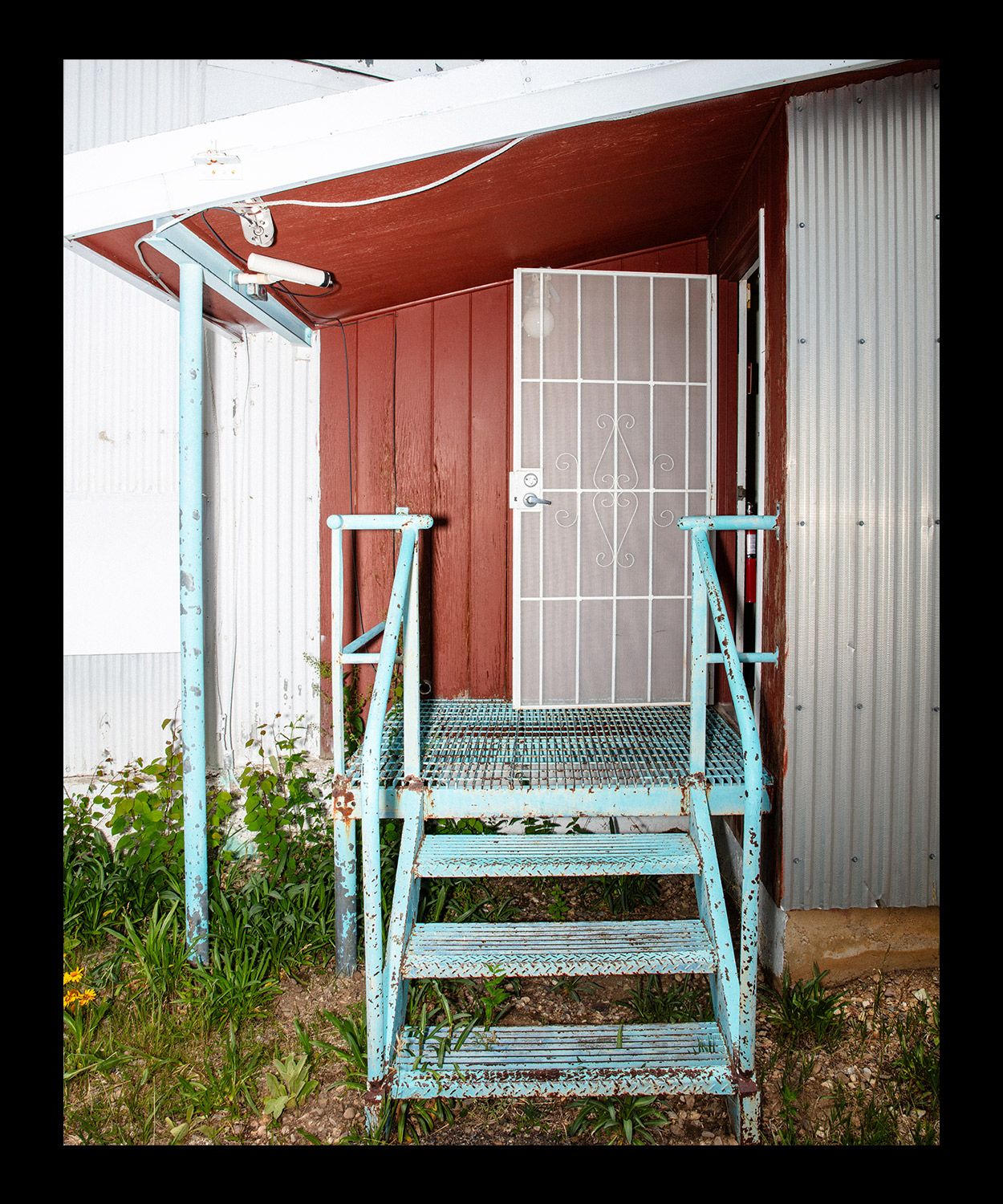
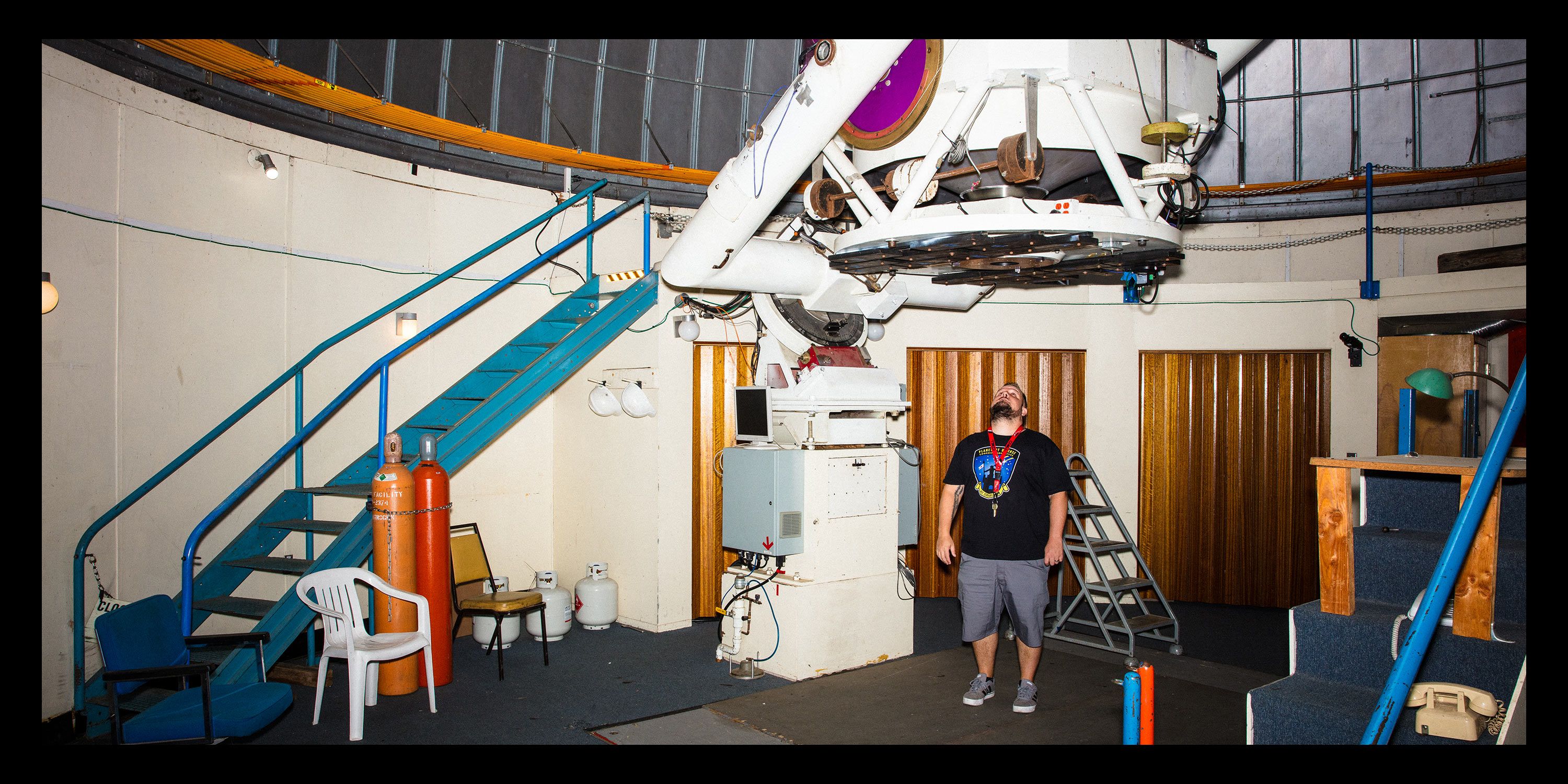
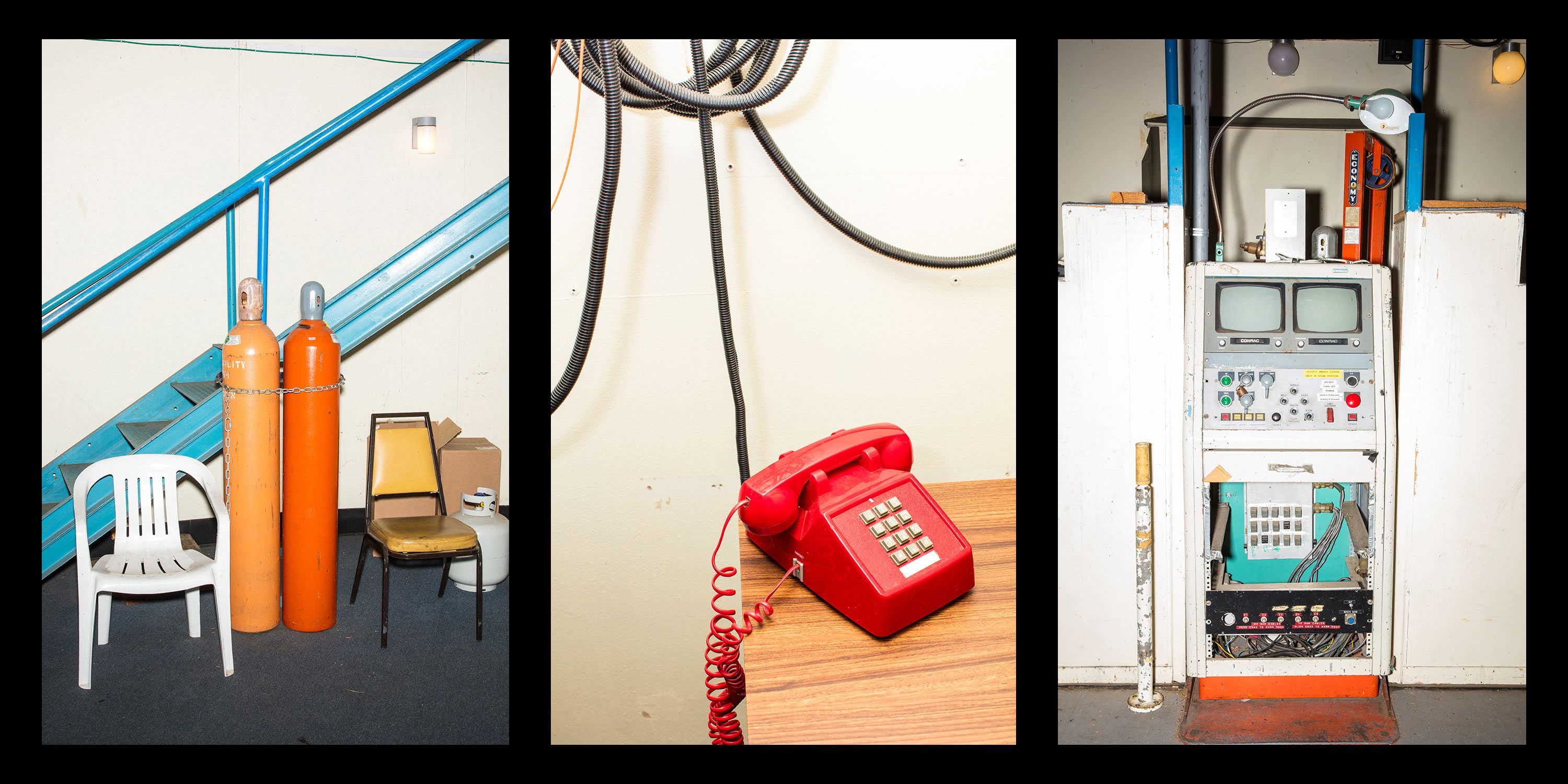
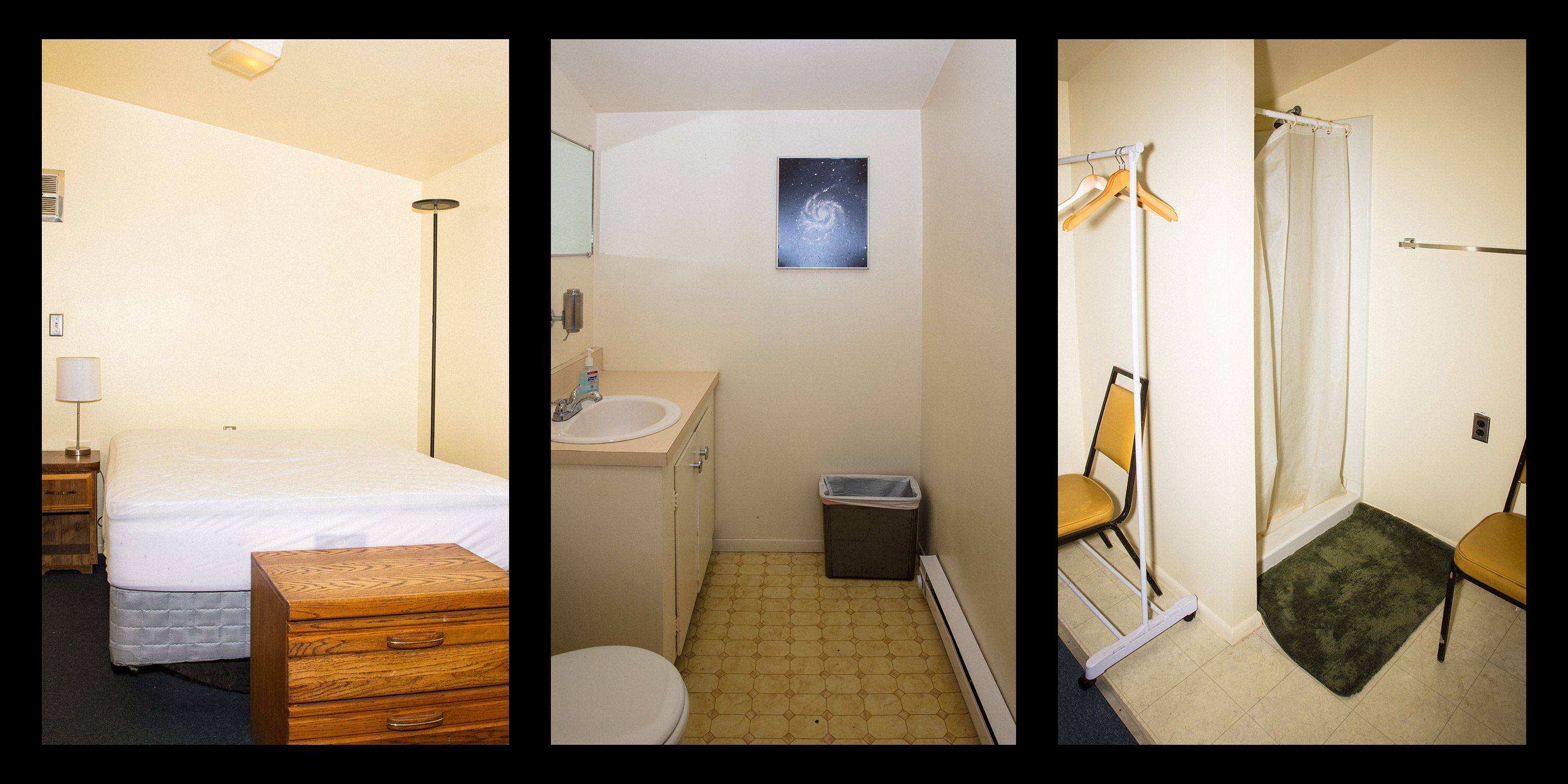
Tell us a little bit about your surroundings. What is this facility like? Because myself and the Supercluster team worked at Kennedy Space Center for a decade, and I would describe it as old and rusty. Some of those pads were falling apart, like, what's the scientific infrastructure? You know, are your instruments up to date? Tell us a little bit about that.
<b> DAVID RANKIN </b>
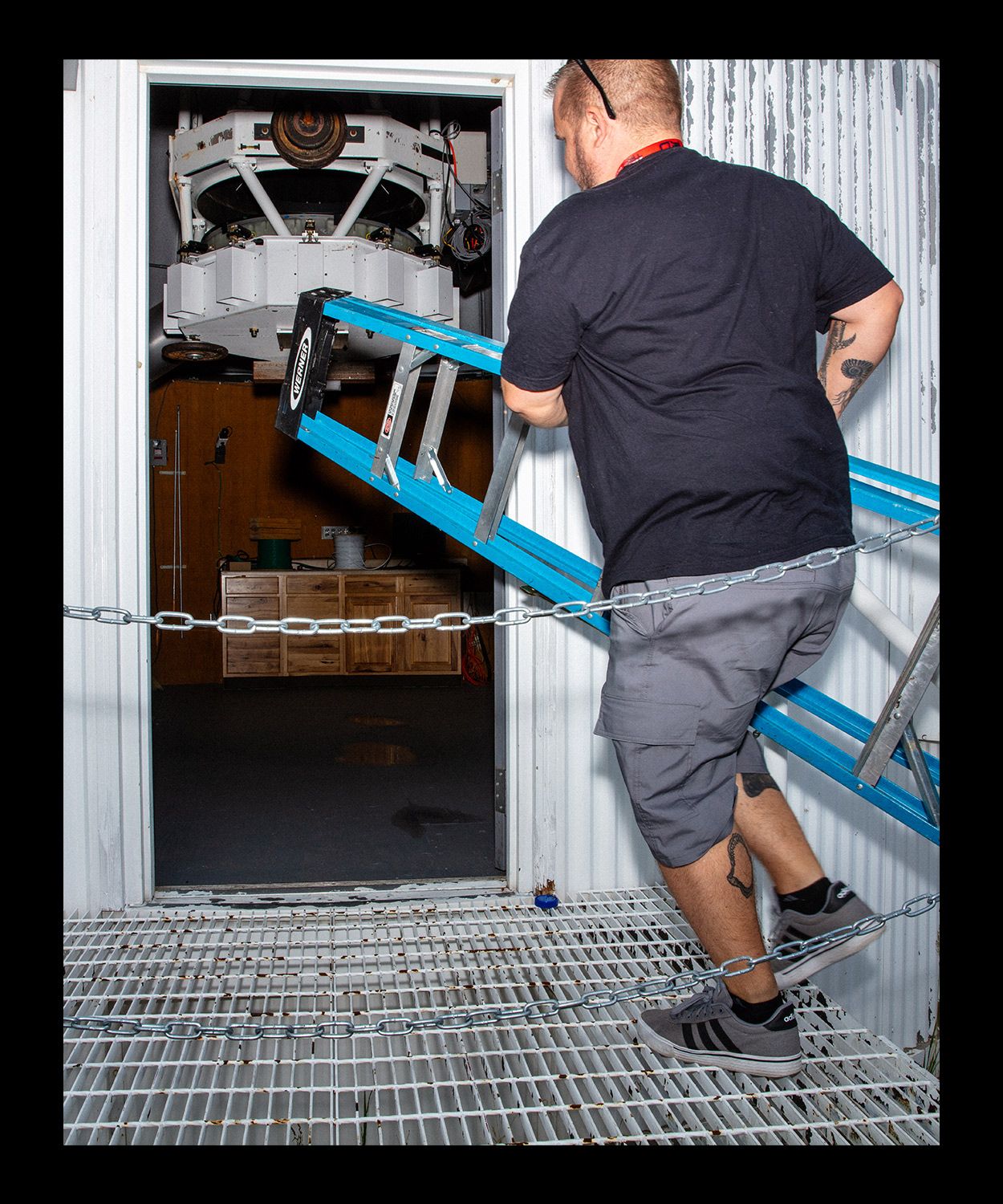
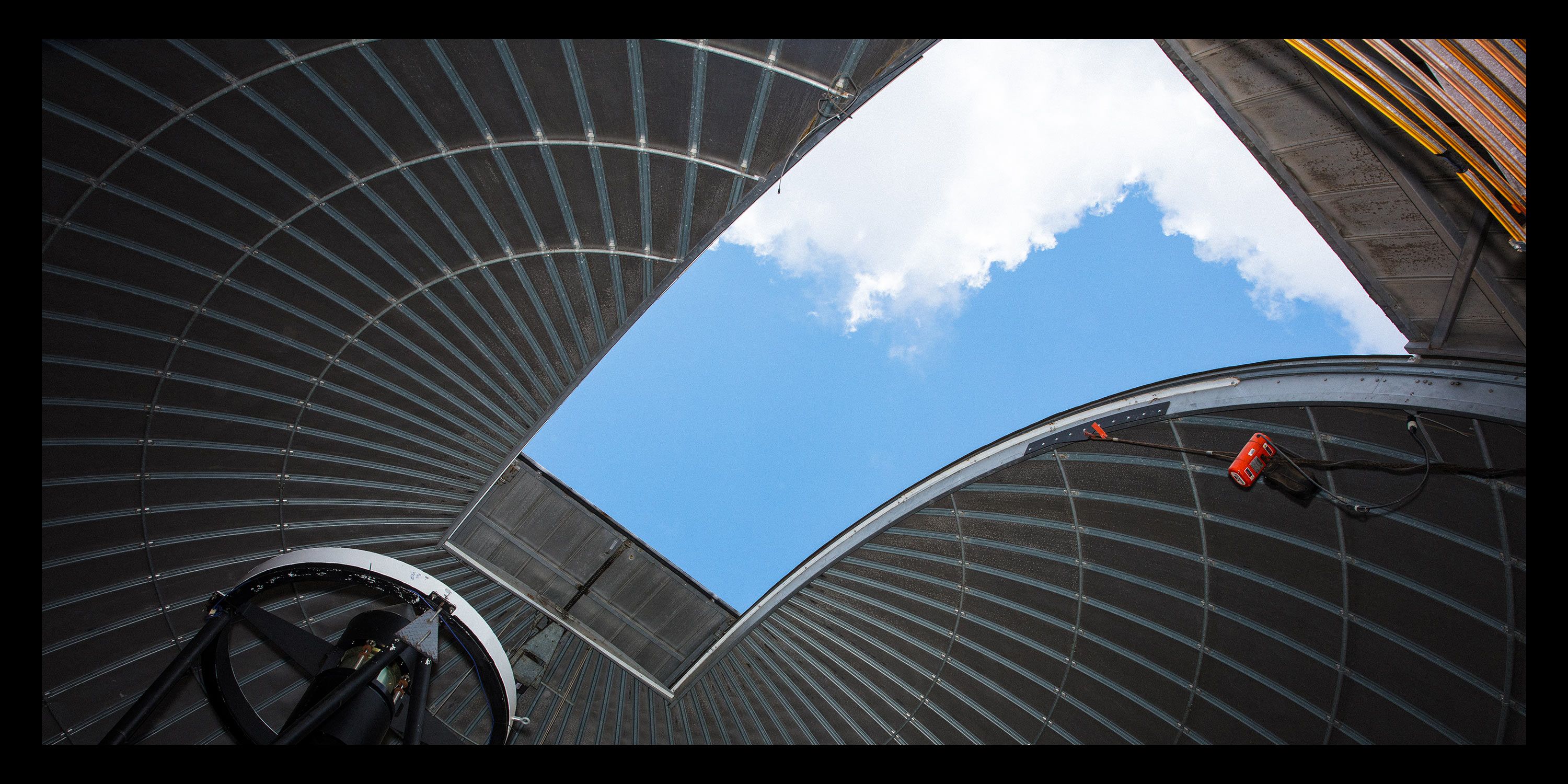
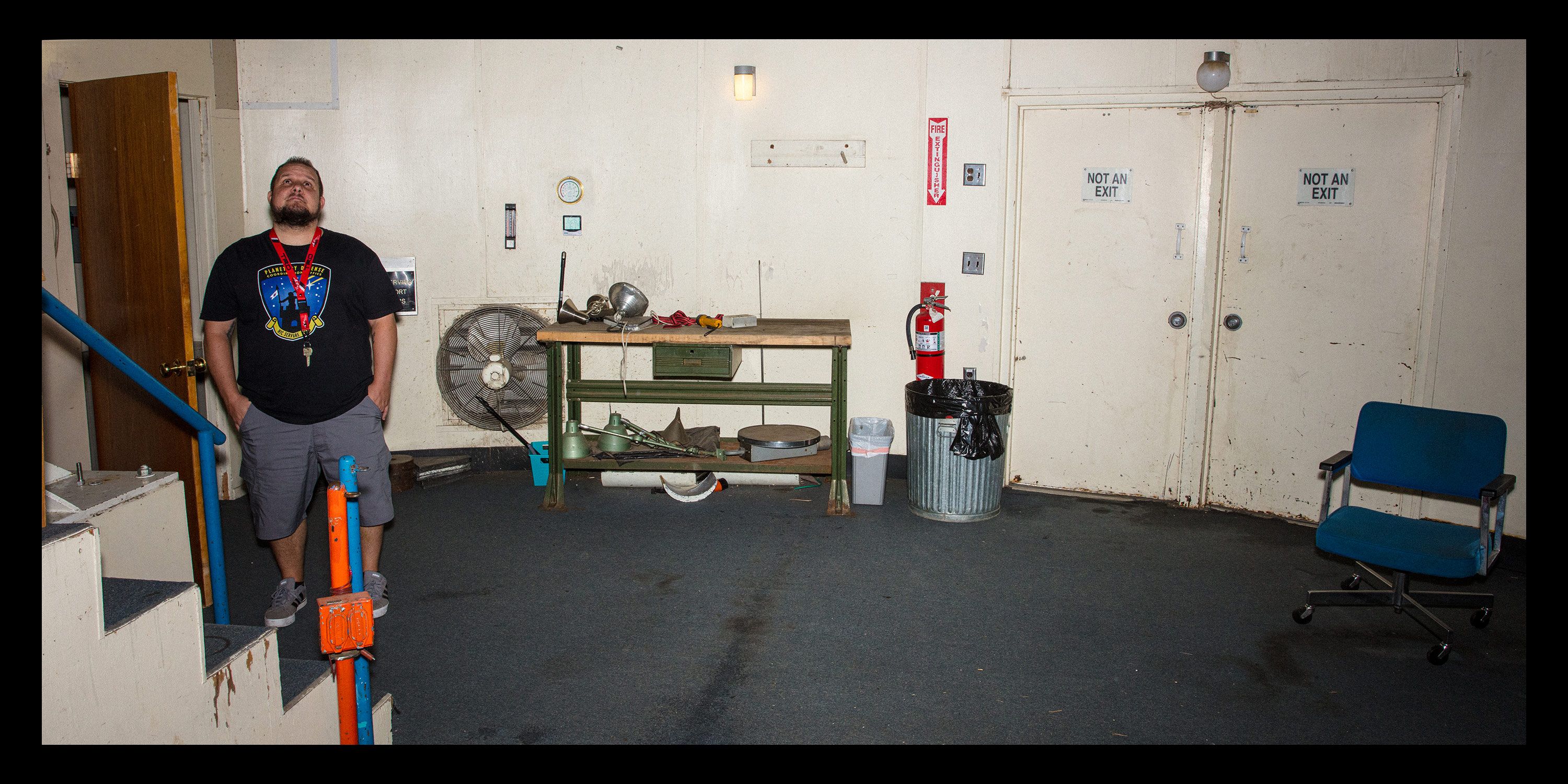
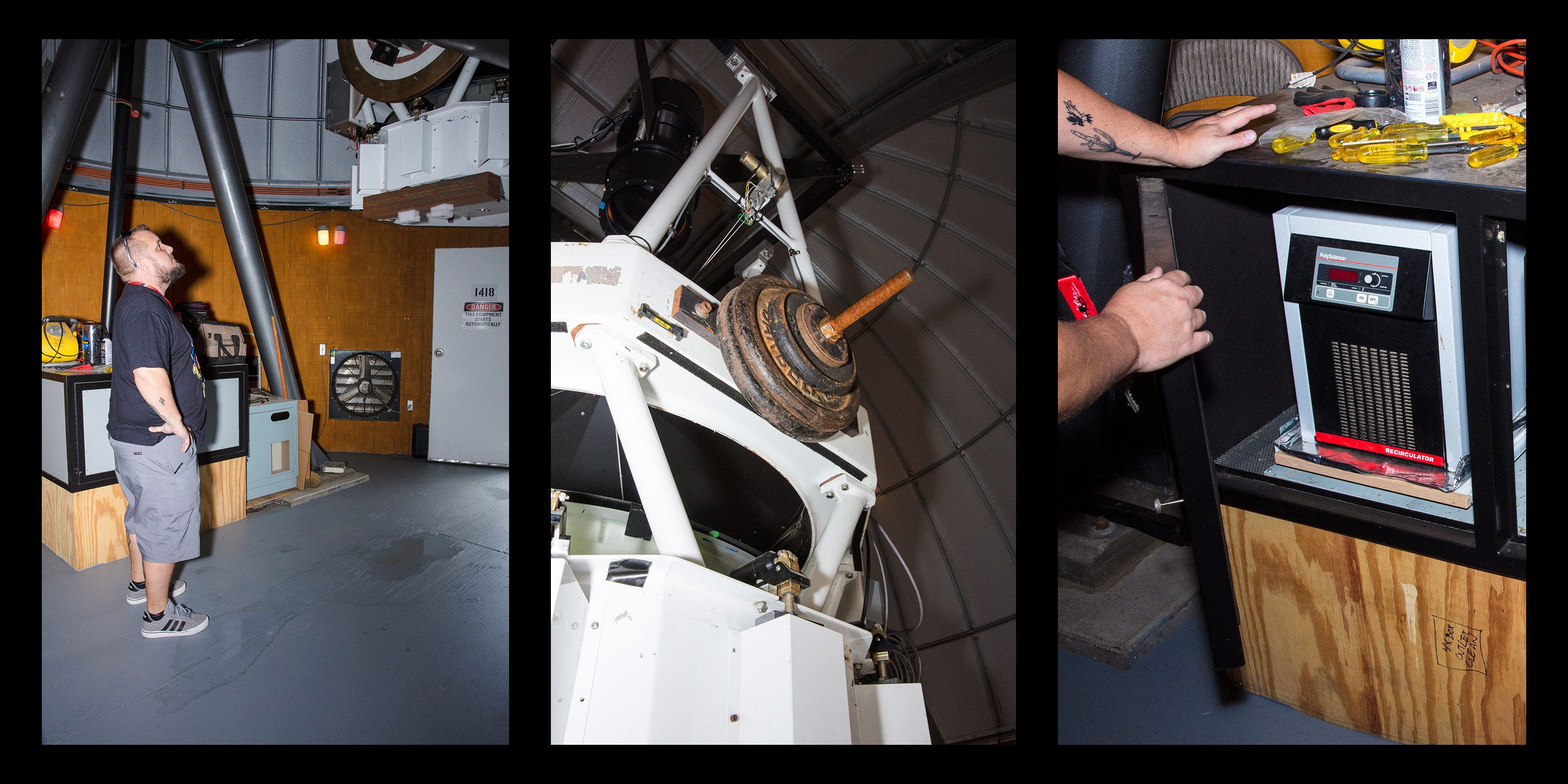
A lot of what happened with the folks that founded Catalina Sky Survey happened on limited funds. A couple of grad students back in the 90s realized that we had some telescopes sitting up on Mt. Lemmon that were put up during the Apollo era that were really big and could be repurposed for the search of hazardous asteroids. They put in their grants for NASA to repurpose these telescopes. And that's where it all started. Our telescopes are pretty old, but we keep them upgraded with the parts that matter. We reworked the optical systems on them to make them really fast and wide field of view. And then we have very high end CCD cameras that are 10k resolution.
Photography by Levi Christiansen.
We keep the operational parts functional on the telescope. It doesn't really matter how old that is, that's gonna last for a really long time. What we keep upgraded is the optical systems and the camera systems. And of course, we develop a whole bunch of software in house that kind of facilitates the hunt, like the tracking stuff.
<b> SUPERCLUSTER </b>
Does the software automatically snap an image, or do you have to do it manually?
<b> DAVID RANKIN </b>
So this is high tech stuff. The telescopes look old, but don't let that fool you. We have very talented software developers.
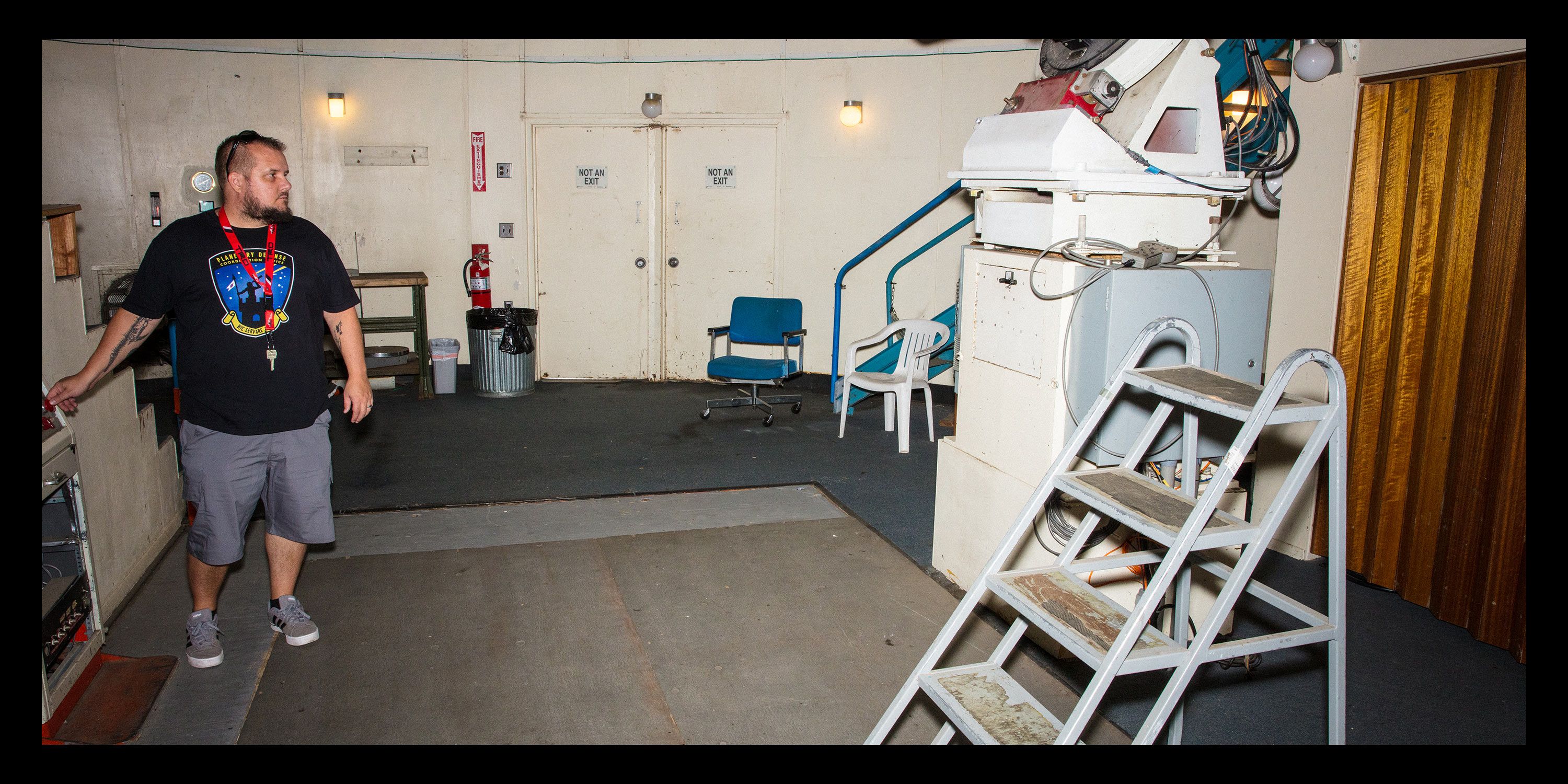
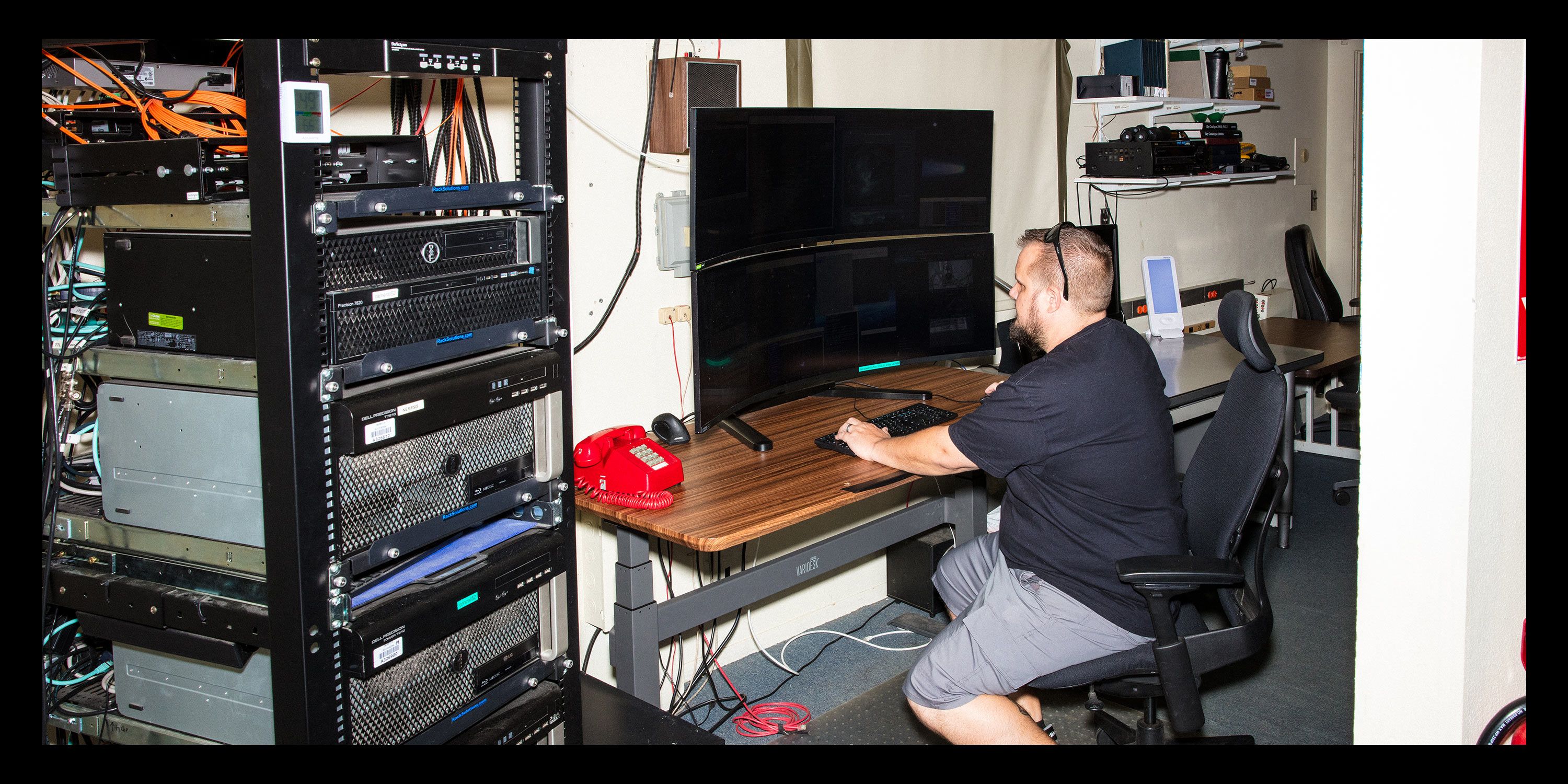
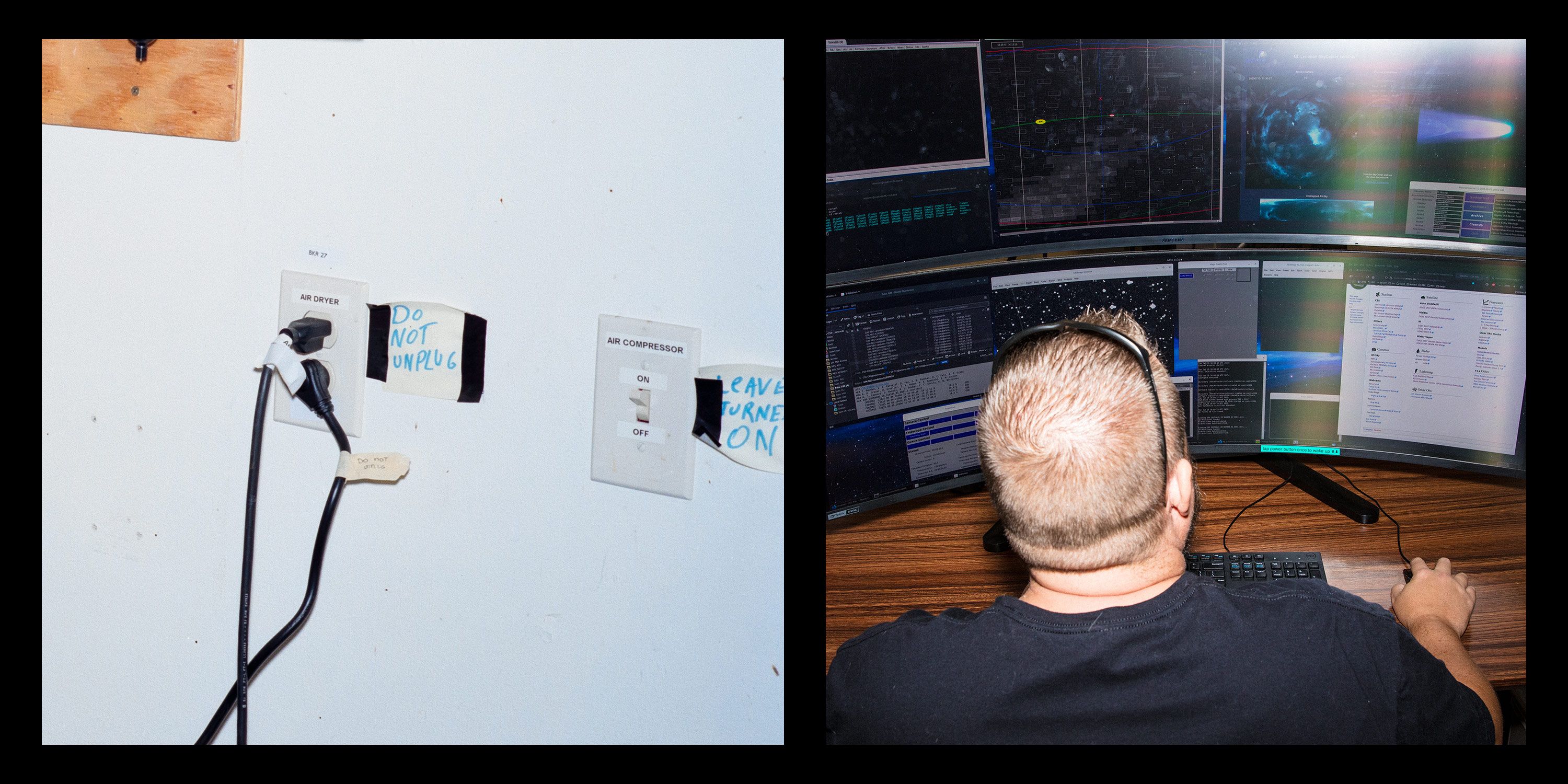
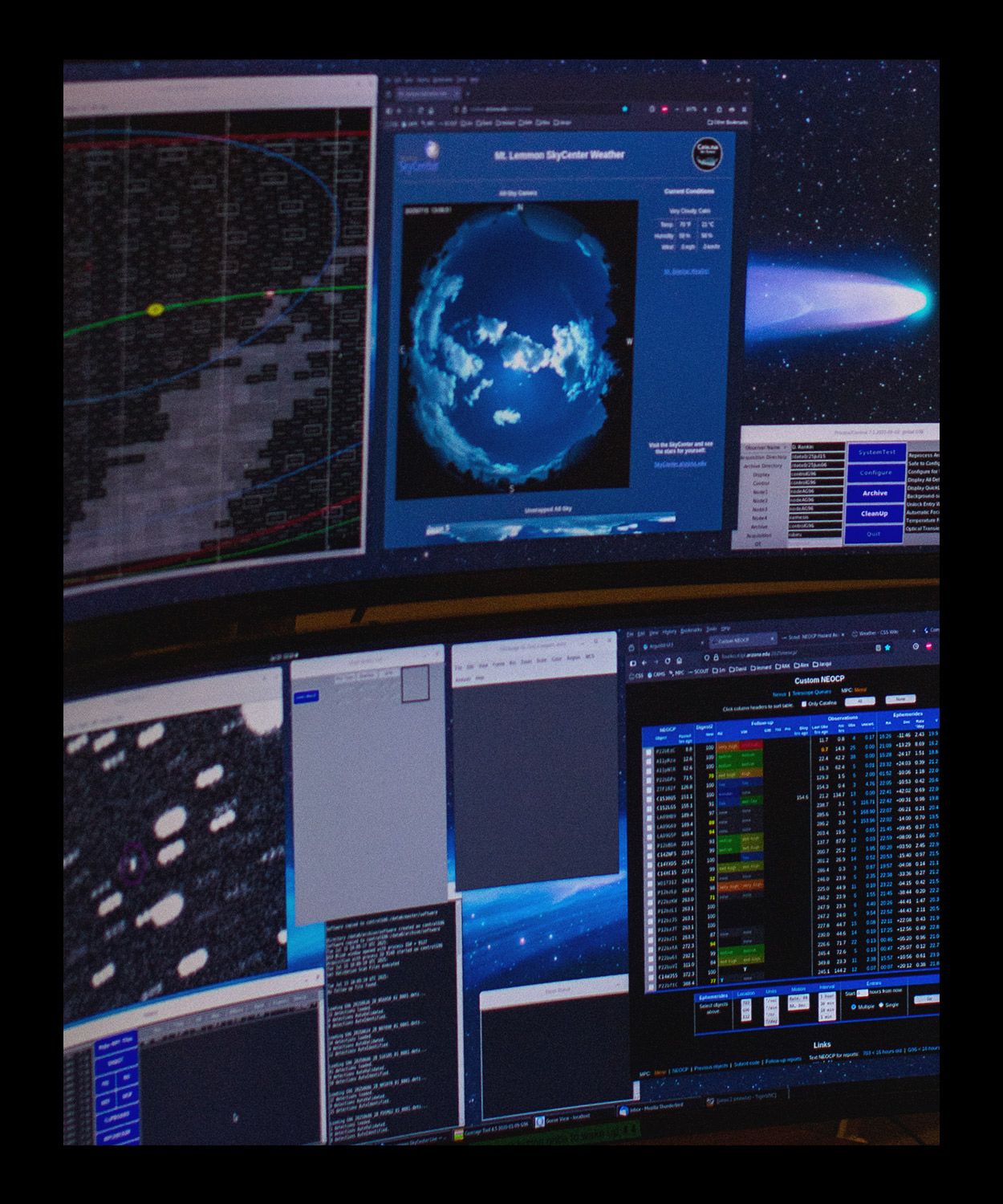
The whole thing is pretty much automated. So I get up there, I tell it, hey, I want to look at this whole band of the night sky, and it will just run all night. I don't even have to think about it. It will keep focused. It'll take images. It does all that stuff and feeds those images into our data reduction pipeline, which has multiple processing nodes, which was that huge server rack you probably saw photos of, and then it goes through that whole set of rings until it's just ready to feed out to the person sitting in the chair who's the observer.
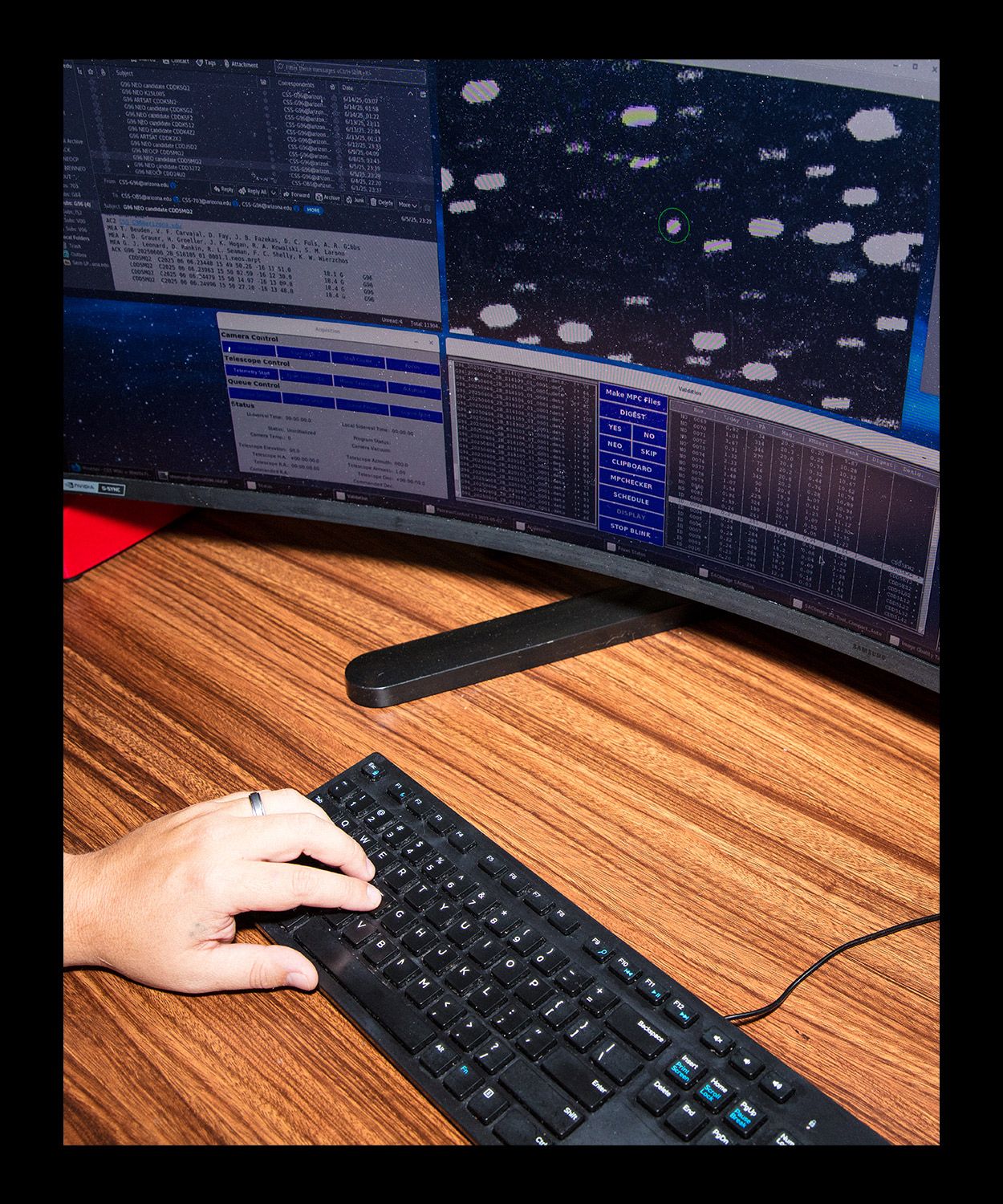
And basically it's saying, “hey, look, I removed all the non-moving sources from these four images, and then I identified all the known asteroids. So here's what I think are the new asteroids.”
And of course, 99% of those are just noise, because we're digging really deep in these images. But every now and then, the software has identified a real detection of a real asteroid, and so it's our job to weed that out and send that data off to the planetary defense community as quickly as possible.
Photography by Levi Christiansen.
<b> SUPERCLUSTER </b>
It sounds like the process has been pretty ironed out. Have you implemented AI or Machine Learning for tracking or databasing or anything like that?
<b> DAVID RANKIN </b>
I’m a programmer too. So I do about half my time programming at the survey. The AI struggles because we work really close to the noise floor. So you'll see just pixels randomly moving, and you're trying to find an asteroid in all that. The AI struggles because noise, by definition, is random. And you're trying to build a set of patterns with AI.
Photography by Levi Christiansen.
I did figure out a way to remove repetitive things that we didn't want to keep seeing that were problematic. So there were what we call false detections that kept coming up that are repetitive, and they kind of present the same way each time, and they were making up a pretty good chunk of the detections that we had to weed through.
I was able to train an AI to recognize those and by removing all those, what it did is it brought up all these other candidates a little higher in the stack and reduced the noise.
Photography by Levi Christiansen.
<b> SUPERCLUSTER </b>
What's your take on the recent interstellar object 3I/ATLAS that has been dominating the news cycle and fueling conspiracy theories?
<b> DAVID RANKIN </b>
Extraordinary claims require extraordinary evidence, and there's no evidence that this thing is anything other than a comet.
And the thing is, everyone wants to find aliens. I have worked in this business for a long time. I know a lot of scientists. Nobody is saying: “Oh, I don't want to find an alien.” That would be the biggest discovery in the history of humanity. Everyone wants that. The idea that there's some big astronomy community pushing back against that is ridiculous.
There's millions of dollars that go into looking for aliens every year.
Photography by Levi Christiansen.
So is this an alien? That's the question, right? Some people are very desperate to find aliens, and other people are very realistic about finding aliens. This is the third one of these objects. That's why it's called 3I/ATLAS. These objects were theorized for a very long time before the first one popped up in 2017 which was Oumuamua. And basically what it comes down to is solar system formation is a very violent process. And as these planets and these large gas giants are migrating in and out of orbits, interacting with each other, forming, massive collisions are happening. It's just not a very peaceful thing.
And they estimate that millions and millions of these objects get flung out of a solar system as it's forming. So you have to think about the billions of stars in our galaxy.
Even before we found the first one, the astronomers were telling us” ‘hey, these things are between the stars. They're out there. They have to be out there. There's no way they're not out there.’ Like even today, we'll watch Jupiter catch a comet that's coming in and shoot it out of the Solar System permanently. It still happens today. And so that's an interstellar comet. It just came from us. So why wouldn’t there be any that came from others?
Photography by Levi Christiansen.
<b> SUPERCLUSTER </b>
That's such a great point, David, because no one ever talks about ones that we would eject out of our solar system.
<b> DAVID RANKIN </b>
Oumuamua was amazing. It was barely over the eccentricity threshold to, you know, be like: ‘Hey, this is an interstellar object.’ I mean, it's just… it almost looks like a straight line that just got bent. It's basically a bullet being fired past the sun.
And nobody that I work with, or I associate with in this business, even for a second said: ‘Oh, that's an alien.’ Like we all went: ‘Yeah, that's a comet.’
Now if 3I/ATLAS, as it was approaching the sun, if it started to slow down dramatically… That would raise eyebrows.
Photography by Levi Christiansen.
Behavior like that would be completely against the natural laws that are governing its orbit. The natural laws that govern its orbit are well understood, and it's obeying those laws. If we see something break those laws, that's when we're going to say: ‘Whoa.’
If this thing takes a 90-degree turn, it's definitely artificial, right? But nothing has ever even come close to breaching that benchmark in my mind, and in the mind of everyone I know in this business. It’s a beautiful object. It's an amazing discovery, but it's not aliens.
And that's the problem with calling these things aliens — is that we don't appreciate the actual astounding science that we're seeing with the actual object and its actual classification. So I hope one day we have the technology to intercept these objects and study them more closely.
Photography by Levi Christiansen.
<b> SUPERCLUSTER </b>
When you're up there by yourself staring at the night sky, do you find yourself thinking about your place in the world? Do you think about your work on a philosophical level?
<b> DAVID RANKIN </b>
I'm a fifth generation Mormon, but I haven’t been associated with the church in many, many years. Science is not a religion. But if it were, it’s my religion.
What I get out of this — I went from a point in my life where I had 100% certainty. because that's what you get. Usually, when you're in these different Christian or other denominations, you get a lot of certainty, like you'll die. You'll go here. This will happen. What I've gained through my journey in life is a deep, deep, deep appreciation for uncertainty.
I am perfectly fine not having all the answers. And I think that it would be boring to have them all. That's how I feel about it.
The wonderment that comes from staring out into the universe and making awesome discoveries is just fascinating, and it keeps me very happy. That's where my joy comes from, now, is being perfectly content with not having all the answers.
I think it's a 180 from, from the way I was raised.
Photography by Levi Christiansen.
<b> SUPERCLUSTER </b>
You must have had this thought at some point: You're sitting there and you look at the blip on the screen, and there's a moment when you realize: ‘I'm the only person on earth who knows that we're doomed.’
What do you do at that moment?
<b> DAVID RANKIN </b>
Luckily, the odds of that happening are very low. That moment would be unlikely to happen by itself, because it's a team effort. When we find these objects we usually don't know where they're going with high certainty. And that includes the orbits of these asteroids when they're first found.
So I might not have that realization at the moment that I find the object, but it could come hours or a day later, and how I would react to that. I don't know. I don't know that anybody in this business knows how they would react to it. It would be terrifying. It would be exhilarating.
The exhilaration part comes from the fact that we're not doomed.
If there's enough lead time, there are things we can do about this, like the DART mission showed. And at the very least, if we find a 50-or-100-meter wide object that's coming in and it looks like it's going to hit a populated area, we could have a week, maybe two weeks — that would be a very unlucky scenario. It's just coming in, and we only have a couple weeks notice. That's still plenty of time to get people out of harm's way, to evacuate.
Photography by Levi Christiansen.
<b> SUPERCLUSTER </b>
So you aren’t looking for doom, you're looking for safety.
<b> DAVID RANKIN </b>
Yeah, we're funded for safety. Like I said, the odds of that happening even during my tenure and my career are pretty low. But what we're doing here is we're putting an investment into one of the only natural disasters we can actually do something about. You're not going to stop a volcano eruption, like Tambora or Krakatoa, you know, you're not going to stop that, that's just going to happen. You're not going to stop a tsunami. You're not going to stop a mag 9.2 earthquake. This is something we can stop. So that's what we're doing.
Support Supercluster
Your support makes the Astronaut Database and Launch Tracker possible, and keeps all Supercluster content free.
SupportWe're trying to find the asteroid that's 500 meters wide that's going to hit us in 100 years. So then our grandkids, grandkids can go: ‘Hey, you know, we were able to deflect it. We're good.’
And again, we’ve ruled out a dinosaur scenario. But there could easily be a half kilometer wide object that poses a threat in the future. So it's an investment, it really is. And honestly, I hope that I'm not sitting at the telescope when we find a rock with short notice coming in. I hope that doesn't happen. I hope that we find it a century early.
Photography by Levi Christiansen.
<b> SUPERCLUSTER </b>
Within your circle of friends — do people ever joke with you — is it like: ‘Oh, there's David. He's making sure the world doesn't end.’
<b> DAVID RANKIN </b>
Explaining what I do to people is always a little bit of a challenge. ‘What do I do? I work for the University, you know.’
My wife, I think, has it pegged the best. She says, when I have to go to work like tonight, she tells me, ‘go back to your scheduled playtime.’ So that's where I go.
<b> SUPERCLUSTER </b>
Levi, Supercluster’s photographer you spent a day with, told us you also are a big storm chaser. Could you talk about that at all?
<b> DAVID RANKIN </b>
Yeah I've been doing that for a long time.
We moved to Southern Utah in ‘91 if I remember. And the monsoon season is pretty cool. Rain, rain is appreciated out here. You know, we're past the dry zone.
Photography by Levi Christiansen.
You get these really big moisture surges that come up in the Gulf of Mexico or the Gulf of California, and usually Tucson, Arizona is baking hot. Everybody just loves the rain out here. And of course, these storms can be pretty powerful, and the lightning is always really beautiful. So I like to go out and shoot photographs of lightning. You can see that stuff on my website. I've been doing that since I was 15, probably.
And part of that is deadly flash flooding. I grew up in this tiny little town, Southern Utah. It's like 700 people, and they were always talking about these “tsunamis.” I didn't really believe it. I went down there and started trying to catch one on film, and I finally got one on film. And then I was hooked. So I probably caught, you know, 40+ of these large flash floods on film, all over Arizona.
It's a wild juxtaposition to be sitting in a desert where it's 105 and the sun is shining, and then a wall of water hits. It's just wild, it's dangerous. They kill people every year. So I've done a lot to try to raise awareness, to let people know that this phenomenon is real and it will hurt you. I've given my videos out to many different institutions. The military uses them. Universities use them, Boy Scout groups, stuff like that.
Just to educate people that are recreating in the Southwest during the monsoon season about the dangers of flash floods and what they actually look like.
I wanted to take it from being a myth to a reality.
....
Many thanks to David Rankin and the Catalina Sky Survey.
You can learn more about David at Rankin Studio.
And a big thank you to photographer and friend of Supercluster Levi Christiansen for spending a day with David at Mt. Lemmon.